Indigenous Nations
Indigenous people were referred to in the U.S. Constitution, but as members of independent nations, they were not considered a part of the new American political system. Indigenous political leaders and their White counterparts clashed over the use and jurisdiction of land. The U.S. government hoped to expand westward, which meant that the Indigenous populations already living there would be displaced, annihilated, or forced to assimilate into White American society.
While they did not consider Indigenous nations part of the new United States, some Framers preferred pursuing assimilation for Native peoples. As governor of Virginia, Thomas Jefferson engaged in exchanges with Jean Baptiste du Coigne, the leader of the Kaskaskia, in which Jefferson expressed his desire to build relationships between the two groups. Jefferson hoped he could keep peace through treaties and by persuading Indian nations to adopt the ways of White America, allowing the two groups to live in peace according to Anglo-American definitions. Jefferson believed that Indigenous people were intelligent and therefore could adopt White Anglo-American culture. But he also wanted to use treaties in hopes to transfer Indigenous land to the United States to grow the size of the nation for White Americans clamoring to move out west.
Prioritizing the building of alliances with Indigenous nations through treaties was a way to ensure that these nations would stay allied with the United States and not the Europeans who occupied land in North America, including the British in Canada and the Spanish in Florida and along the Gulf Coast.
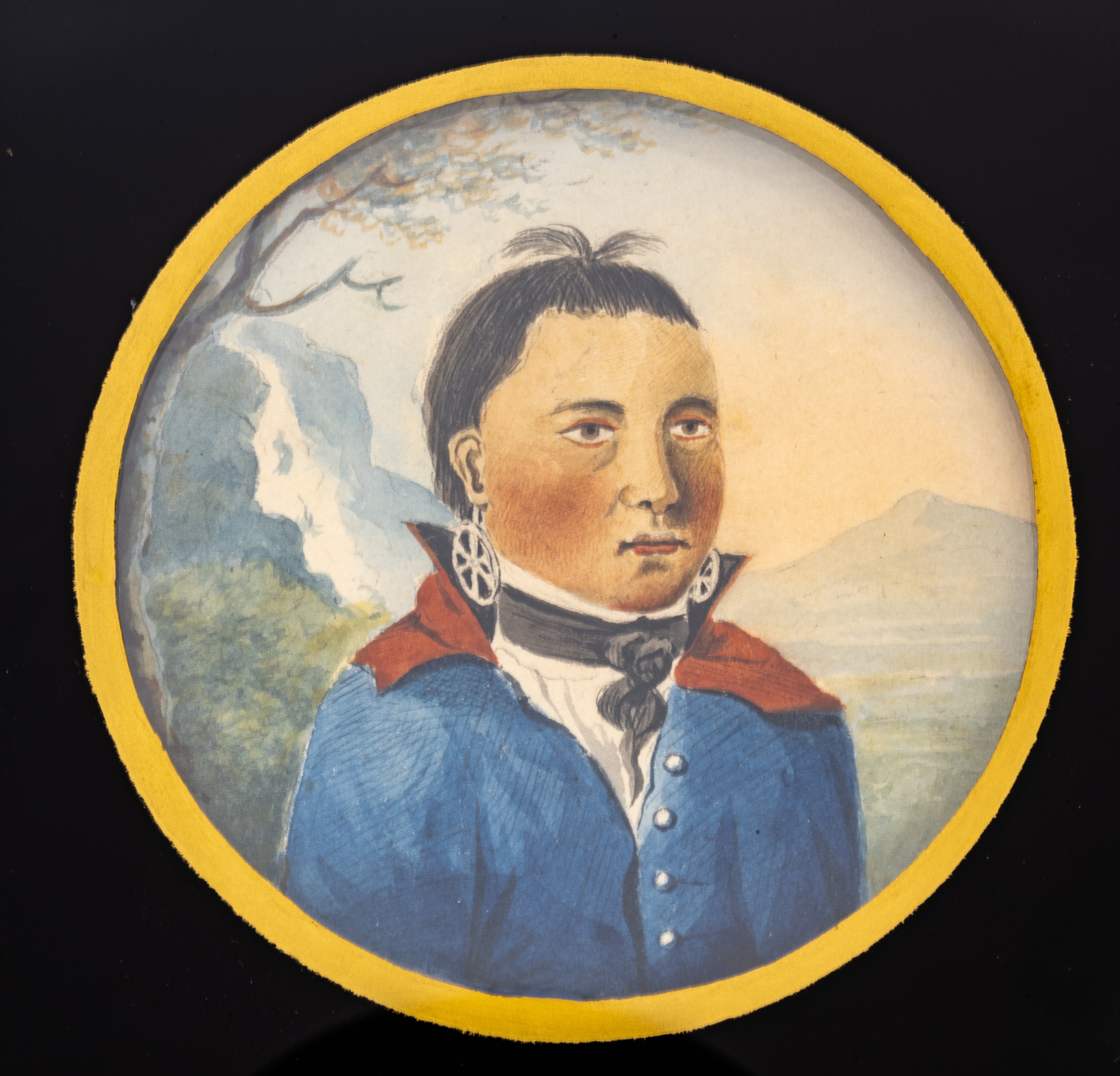
An 1805 painting of Wa Pawni Ha, a young chief of the Sac Nation. The painting was sent to Thomas Jefferson by the artist, John Wood, who had met Wa Pawni Ha en route to Washington, D.C., on a diplomatic trip.
Jefferson’s vision of liberty for Indigenous people directly contrasted with their views of liberty. Many Indigenous nations fought to preserve their families, homelands, community, languages, and cultures.

