The Expansion of Suffrage
—John Adams, to his friend John Sullivan, stating why people without property should not be able to vote, 1776
The right to vote and hold office in the new nation was a fraught issue that was typically tied to property ownership. Many of the Framers opposed universal male suffrage, feeling that requiring voters to own property helped maintain good judgment among the electorate.
The Constitution left voting rights up to the states, and while state constitutions began to see voting as a right, they did not grant universal suffrage for men. Many southern states, such as South Carolina, required property ownership as a condition for voting. Pennsylvania eliminated property ownership but had a taxpayer requirement, meaning that those in servitude or in poverty could not vote. New Jersey’s 1776 state constitution granted voting rights to all “inhabitants” who met the appropriate property requirements. By the 1820s, during the Jacksonian era, attitudes had shifted to expand suffrage to all White men.
While it might not seem like much today, this was the beginning of the long and complicated struggle for the expansion of suffrage.
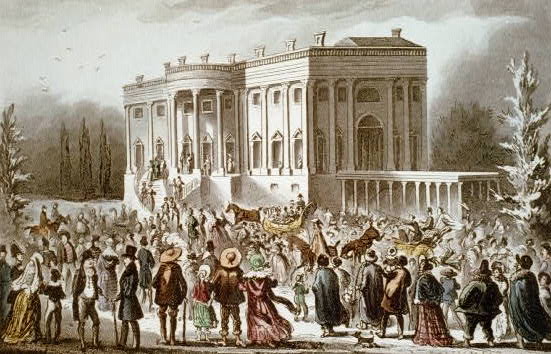
An 1841 painting depicting the crowded and chaotic scene at the White House during the inauguration of President Andrew Jackson in 1829. Jackson supported universal male suffrage.

