Navigating Slavery and Freedom
“Slavery” was one of the most frequently used words in Revolutionary America. It wasn’t used to discuss or debate the enslavement of thousands of people in the colonies, but to lambast the British crown for denying the colonists their personal and political rights. Many British people called out the hypocrisy. How could the American colonists demand liberty while they were enslaving Black people for their own benefit? While the contradiction between slavery and freedom seems obvious, abolishing the institution that had seeped through the economic, moral, and social fabric of society would prove more difficult.
Before independence, Enlightenment ideals had come to view slavery as morally wrong in the Atlantic world. As early as 1700, Boston’s Samuel Sewall published a pamphlet using the Bible and moral reasoning to condemn slavery: “It is most certain that all men, as they are the Sons of Adam, are Coheirs; and have equal right unto liberty, and all other outward comforts of life.” But antislavery sentiments did not become a public rallying cry until the Revolution, when abolitionists began to call for the American Revolution to live up to its values. Connecticut preacher Jonathan Edwards argued that natural rights declared in the Declaration of Independence justified the abolition of slavery. First Lady Abigail Adams opposed slavery and favored abolition in the early 1770s.
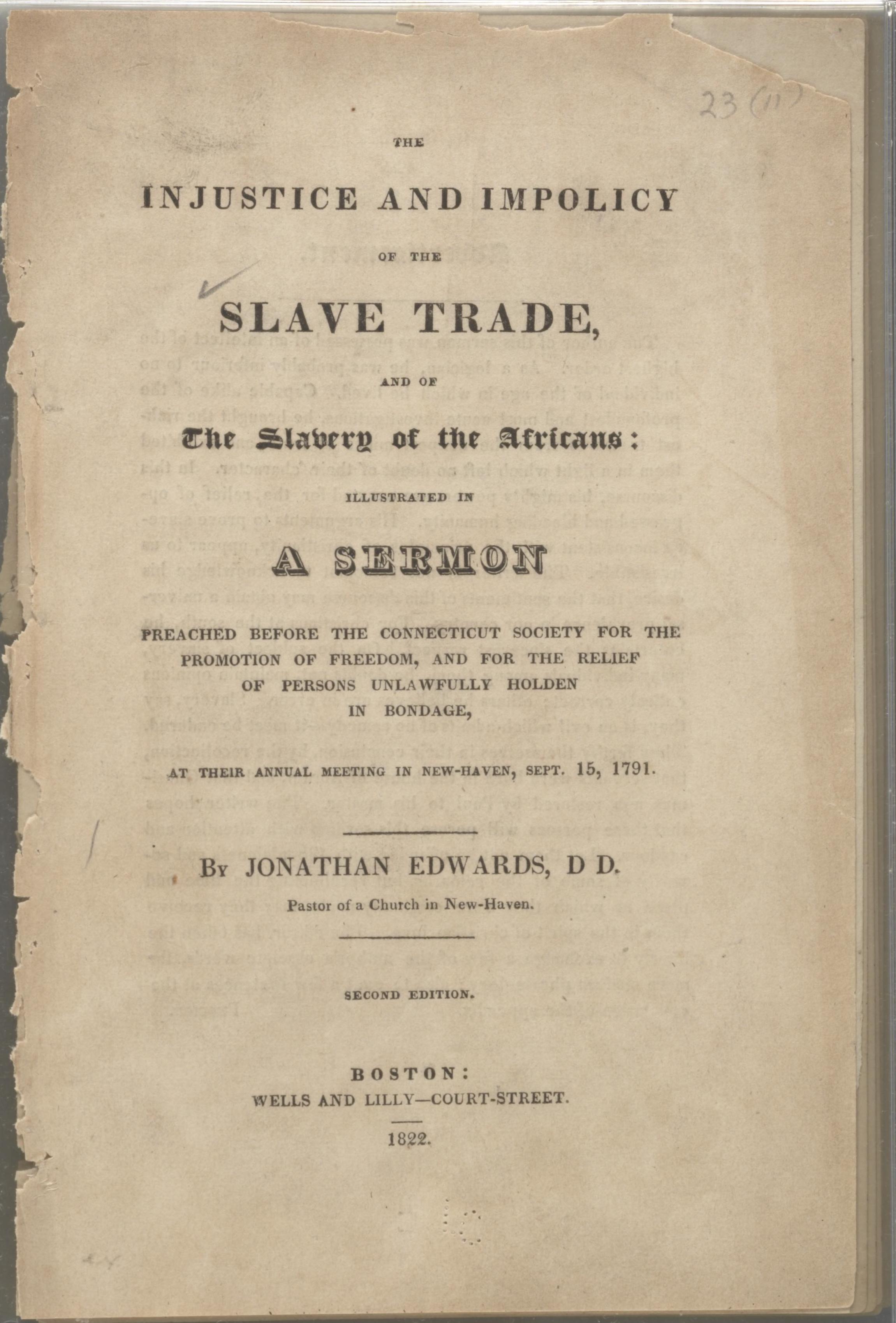
A printing of a 1791 sermon on the “injustice and impolicy” of slavery.

