Bright Areas All Around Ceres
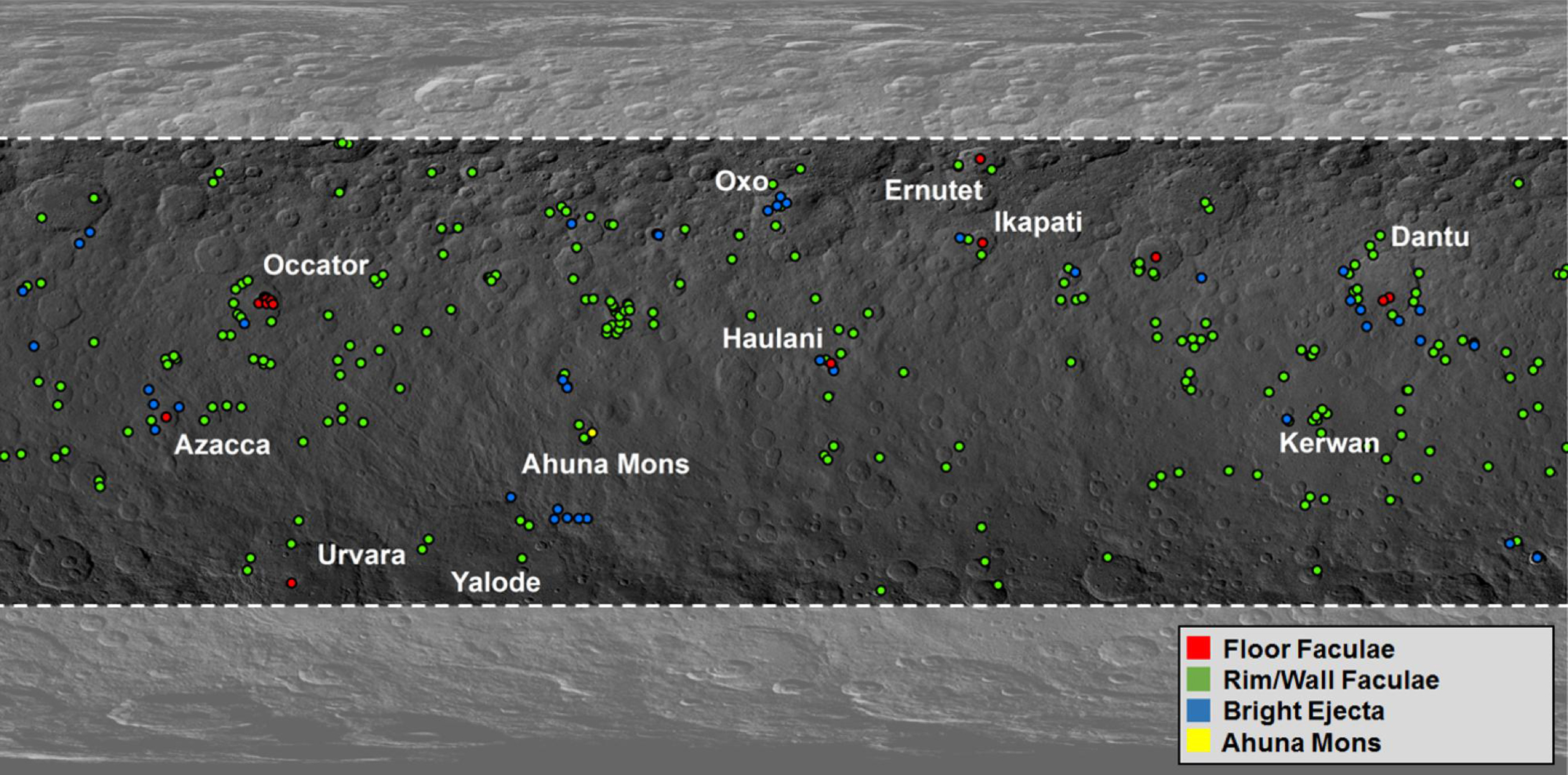
Map of Ceres’s complete surface. The bright areas fall into one of four categories, identified by color. Red spots indicate areas located on the bottom (or floor) of craters. Green spots indicate bright areas located on the rims or walls of craters. Blue spots indicate a place where the material ejected from an impact crater. The yellow spot is a surface feature called Ahuna Mons.
Scientists have located more than 300 bright areas on Ceres. Using remote sensing instruments, they determined that all of these bright areas are composed of carbonate minerals.
These carbonate minerals form from a chemical reaction between carbon dioxide and minerals dissolved in liquid water.
Produced by

