MEET THE TUBA
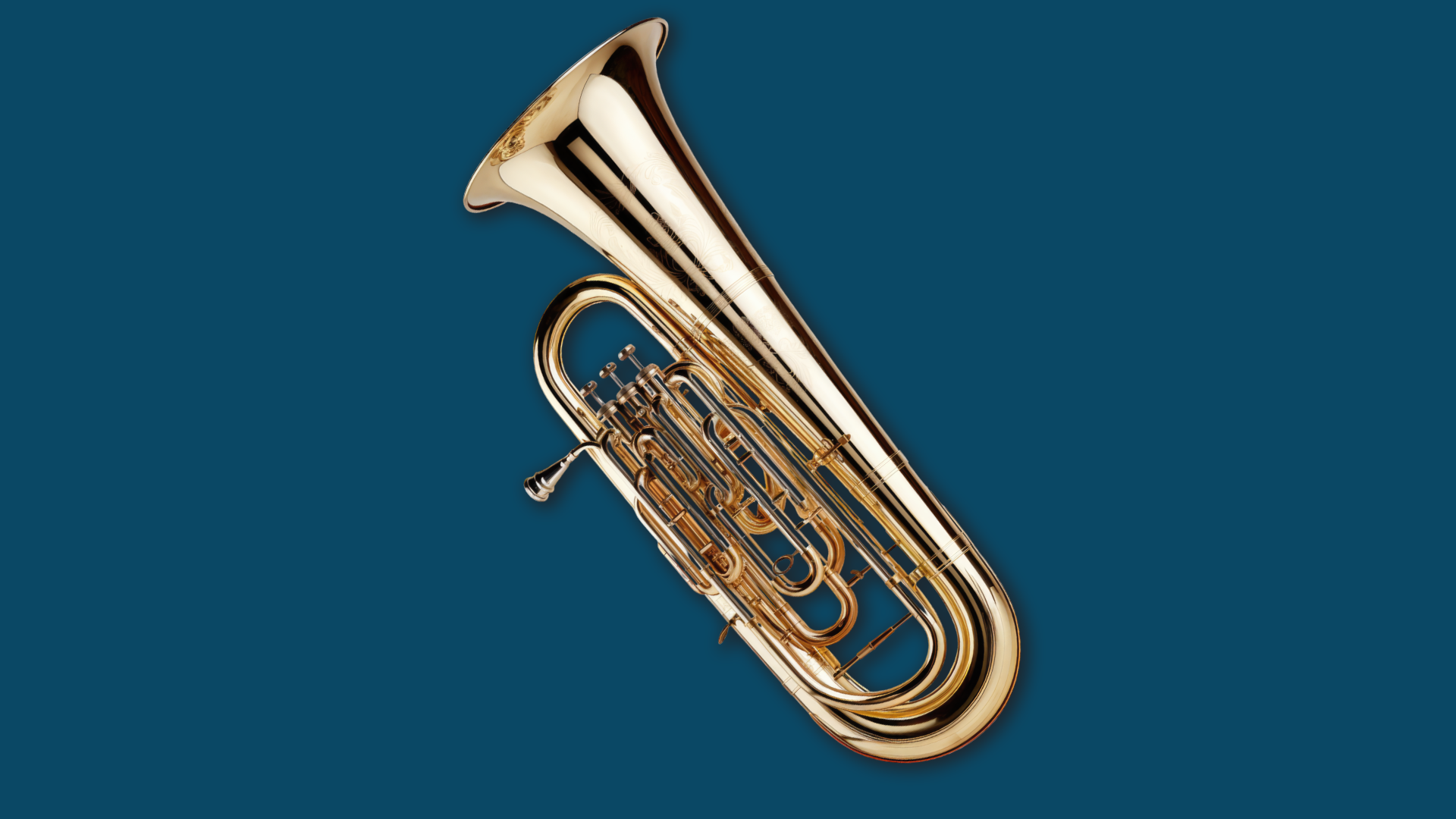
The largest of the Brass Family found in the orchestra. It has a mouthpiece, and valves used to create sound and change the pitch. Because the tuba is so large, it makes the lowest pitches of the Brass Family in the orchestra. The tuba has a very large bell, with a deep and rich sound.
The word “tuba” comes from the Latin word for “tube”. A person who plays the tuba is called a tubaist, tubist, or tuba player. The tuba is so large it requires a lot of breath to play. There are different types of tubas which vary in size.
WATCH THIS: Take a video tour of the Trombone with Craig Fuller, principal tuba player in the Omaha Symphony.
| Keyboard Shortcut | Action |
|---|---|
| Space | Pause/Play video playback |
| Enter | Pause/Play video playback |
| m | Mute/Unmute video volume |
| Up and Down arrows | Increase and decrease volume by 10% |
| Right and Left arrows | Seek forward or backward by 5 seconds |
| 0-9 | Fast seek to x% of the video. |
| f | Enter or exit fullscreen. (Note: To exit fullscreen in flash press the Esc key. |
| c | Press c to toggle captions on or off |
Meet the Tuba with Craig Fuller
Hi, I'm Craig Fuller, principal tuba player in the Omaha Symphony.
I'm here to talk to you about my instrument, the tuba.
You know, in the Omaha Symphony we have a number of different kinds of brass instruments.
We have trumpets, trombones, french horns, and the lowest and largest of all the brass instruments, the tuba.
So on all of our breasts instruments, we make the sound in the same way.
We all buzz or vibrate our lips into this thing called the mouthpiece.
And it's just a funnel shaped metal object.
And it sounds like this by itself doesn't really sound very good by itself.
Listen to what happens when I put that into the instrument.
Sounds louder. Hopefully also more pleasing to the ear.
You know, our tuba were invented about 200 years ago, but before that, many different cultures played instruments similar to this.
They had Roman lures and they had this instrument in Australia, it's called the Deri Do.
And it's simply a hollowed out eucalyptus log with a wax rim here for a mouthpiece.
And it's common practice for People, the original or um, native people in Australia to play this instrument and tap it with a stick to keep rhythm.
Now we play it in the same way as we play the tuba.
We buzz or vibrate our lips.
We add one other thing, and we shum or sing while we, while we buzz our lips.
And it sounds like this by itself.
So really a pretty cool instrument.
And like I said, they've been playing this instrument for generations, hundreds of generations.
You know, all of our breast instruments change the length of the instrument to get to different notes.
They play different pitches.
So on the tuba, I can play a few notes with just my lips.
But to fill in those notes between, I have to use these things called valves, which changed the length of the instrument.
So with valves, I can play all the notes in between.
So that's how the tuba works.
Now I'd like to play a little piece for you to show you what the instrument sounds like, playing some music.
So in the tube of you can play all different kinds of music.
I have a little bit of blues music here to show you what that might sound like on the tuba.
So that's the tuba. It's a fun instrument to play.
I really enjoyed it.
EXPERIENCE THIS: Tour the Tuba in 3D space, learn more about this instrument.
Use the Notes feature below to answer the questions below. When finished, click the Save button to add to your "My Work" folder.
- What instrument part makes sound and is consistent throughout the full brass instrument family?
- How do you make sound with this piece of the instrument and what is that called?
- How do you change the pitch on the tuba?
- What is the didgeridoo, and how is it similar to the tuba?
Craig Fuller, the principal tuba player of the Omaha Symphony, discusses the tuba, a unique brass instrument played by buzzing the lips into a funnel-shaped mouthpiece. Although the tuba was invented around 200 years ago, similar instruments have existed in various cultures for centuries. While the tuba can produce a limited range of notes through lip vibrations, valves are essential for altering the instrument's length to create the full spectrum of notes. Thus, the tuba’s design allows for a wide range of musical expression.

