MEET THE TRUMPET
The trumpet is a brass instrument that you can always hear. It has a mouthpiece, like a little cup. When the player’s lips blow air through the instrument, they vibrate against the mouthpiece. This is what makes the sound you hear. The trumpet has three buttons, called valves, that change the length of the tube. The pitch is changed by adjusting the tube length and by how fast the players buzz their lips.
The trumpet is the smallest and highest pitched brass instrument. A person who plays the trumpet is called a trumpeter. A person who repairs brass instruments is called an instrument repair technician.
WATCH THIS: Take a video tour of the trumpet with Federico Monte, associate principal trumpet of the Omaha Symphony.
| Keyboard Shortcut | Action |
|---|---|
| Space | Pause/Play video playback |
| Enter | Pause/Play video playback |
| m | Mute/Unmute video volume |
| Up and Down arrows | Increase and decrease volume by 10% |
| Right and Left arrows | Seek forward or backward by 5 seconds |
| 0-9 | Fast seek to x% of the video. |
| f | Enter or exit fullscreen. (Note: To exit fullscreen in flash press the Esc key. |
| c | Press c to toggle captions on or off |
Meet the Trumpet with Federico Monte
Hi everybody.
My name is Federico Monte and I am the associate principal trumpet of the Omaha Symphony.
Let's meet the trumpet.
This is the mouthpiece, and it sounds by buzzing our lips just like this.
The mouthpiece goes in the lead pipe that takes all the air through the instrument.
These are the pistons, and they change the length of the tubes, and depending on how the length of the tubes, the speed of our air, and the buzzing through the mouthpiece, that's how we change the pitch of the trumpet.
Lastly, this is the bell.
This is something like an amplifier for the sound, thanks to a long bell and the end.
That's how we are able to project so much more in our instruments.
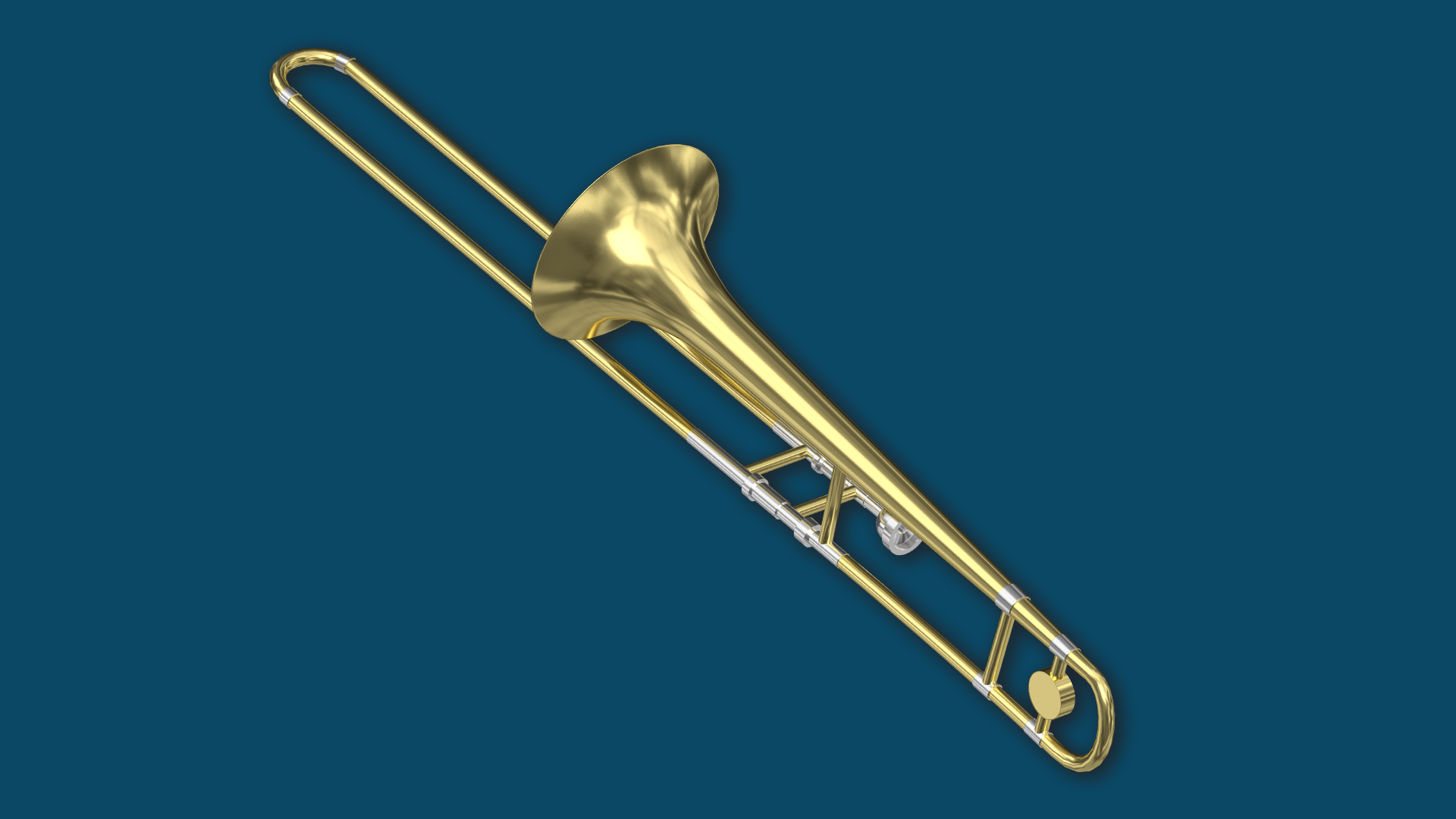
EXPERIENCE THIS: Tour the trumpet in 3D space, learn more about this instrument.
Use the Notes feature below to answer the questions below. When finished, click the Save button to add to your "My Work" folder.
- What instrument part makes sound and is consistent throughout the full brass instrument family?
- How do you make sound with this piece of the instrument and what is that called?
- How do you change the length of the tubes with the trumpet?
- What factors are involved in changing the pitch in playing the trumpet?
In this presentation, Federico Monte, the associate principal trumpet of the Omaha Symphony, introduces the various components of the trumpet. He explains that sound is produced by buzzing lips into the mouthpiece, which is connected to the leadpipe that channels air through the instrument. The trumpet features pistons that alter the length of the tubes, thus modifying the pitch based on the airspeed and buzzing. Finally, he highlights the role of the bell at the end of the trumpet, which amplifies the sound, allowing for greater projection when playing.
NOTE: The video on the right is in Spanish, review the video above for the English version.
| Keyboard Shortcut | Action |
|---|---|
| Space | Pause/Play video playback |
| Enter | Pause/Play video playback |
| m | Mute/Unmute video volume |
| Up and Down arrows | Increase and decrease volume by 10% |
| Right and Left arrows | Seek forward or backward by 5 seconds |
| 0-9 | Fast seek to x% of the video. |
| f | Enter or exit fullscreen. (Note: To exit fullscreen in flash press the Esc key. |
| c | Press c to toggle captions on or off |
Hola a todos.
Mi nombre es Federico montes y yo soy el trompetista principal asociado de la orquesta sinfónica de omaha.
Hoy conoceremos un pa un poco de la trompeta.
Esta es la boquilla y la boquilla suena siendo vibraciones por nuestros labios.
Sí, tal cual ha como esto de la boquilla, vamos a la trompeta.
La trompeta tiene lo que llamamos los pistones, el tude y la campana.
La campana es como el amplificador de la trompeta y la trompeta suena en diferentes formas.
Conforme movemos nuestro pistones, cambiamos la velocidad del aire y movemos las vibraciones de nuestros labios, por ejemplo.

