MEET THE TROMBONE
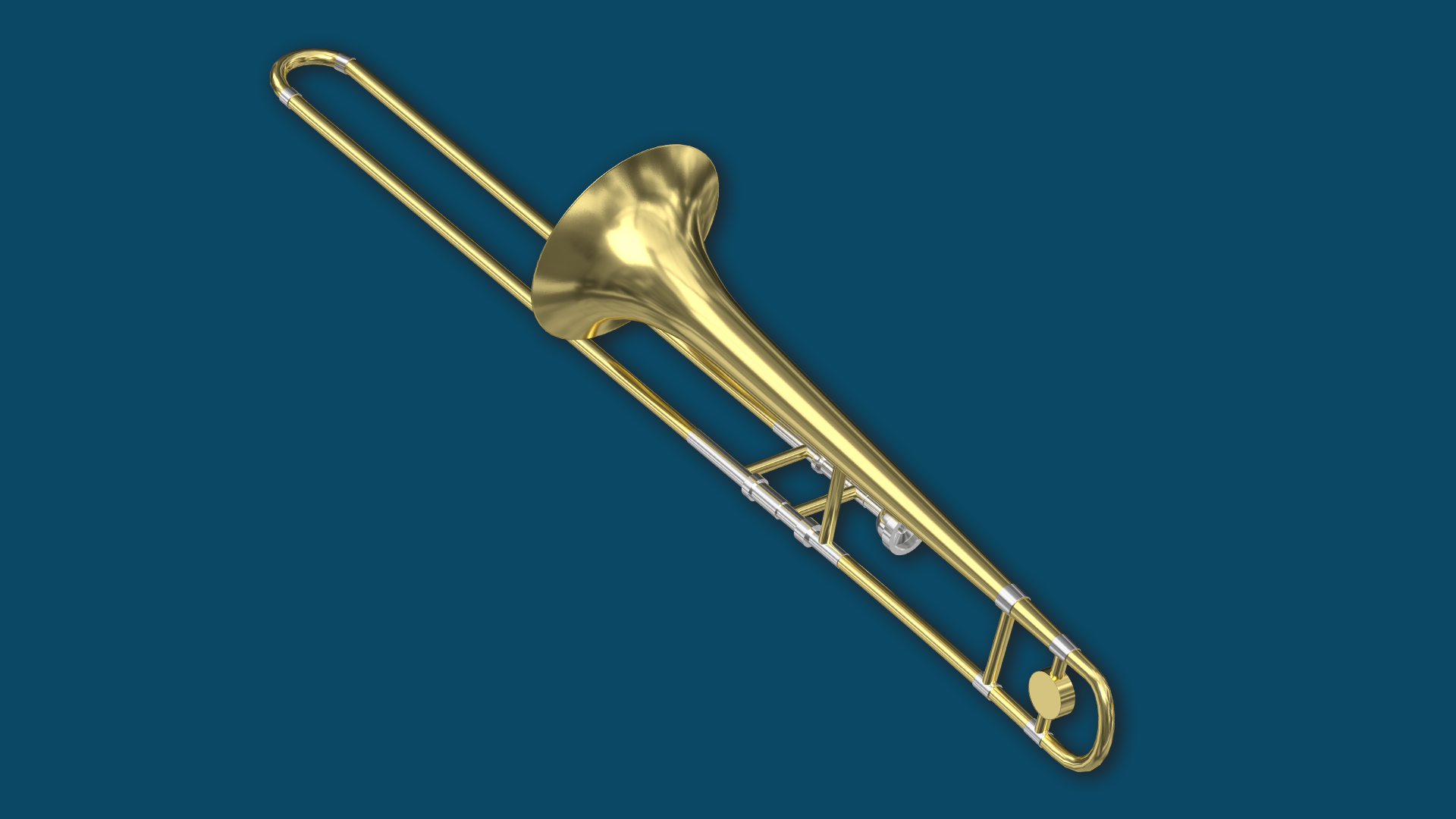
The Trombone is a brass instrument. It has a mouthpiece like the trumpet but does not have valves. Instead, trombones have a slide. The player changes pitch by moving the slide in and out. If you were to stretch out a trombone it would be about 9 feet long. There are different types of trombones that vary in size. A person who plays the trombone is called a trombonist or trombone player.
WATCH THIS: Take a video tour of the Trombone with Justin Brown, from the Omaha Symphony.
| Keyboard Shortcut | Action |
|---|---|
| Space | Pause/Play video playback |
| Enter | Pause/Play video playback |
| m | Mute/Unmute video volume |
| Up and Down arrows | Increase and decrease volume by 10% |
| Right and Left arrows | Seek forward or backward by 5 seconds |
| 0-9 | Fast seek to x% of the video. |
| f | Enter or exit fullscreen. (Note: To exit fullscreen in flash press the Esc key. |
| c | Press c to toggle captions on or off |
Meet the Trombone with OSO's Justin Brown
Hello, my name is Justin Brown and I play the trombone.
Today I'm gonna talk to you about it.
Uh, this is one of the most simply constructed brass instruments.
It features a slide section that makes the slide long or shorter.
It also features a nice bell section here.
Uh, and that's really all there is to the trombone.
It's also one of the most simple instruments to make a sound on.
All you have to do is make an m with your face and blow air, and then the trombone will take care of the rest.
Um, so everything happens here through the mouthpiece.
So, uh, if you can buzz it, you can play it.
So here I am, uh, making that same pitch.
One of the nice things about the trombone, what makes it unique is the slide section.
Uh, so all other instruments have, uh, keys or valves in order to change the pitches here.
But on the trombone, again, all we do is just slide the, the trombone out.
So, um, the slide can really make the, the tubing much longer.
And so when we have a longer tube that lowers the pitch or it'll raise the pitch as well.
So here I am, and that's one of the most basic ways, uh, on how to make sound on the trombone.
So the trombone is a brass instrument, and brass instruments have these, uh, partials that we, uh, play off of.
So, um, in open position, I have a whole bunch of notes that I can play, and these notes can just keep going up and up.
And the way that I do that is by making the vibrations on my mouth a little bit faster.
It's kind of a slow vibration.
It's A really, really low sound.
Trombone has one of the, the biggest ranges of sound, uh, from really, really low sounds to really, really high sounds.
Right. Uh, so that's, uh, one of the really fun things about this versatile instrument here.
If you are starting out on the trombone, however, you're gonna most likely be playing on something that looks a little bit more like this.
Notice the difference between these two trombones.
Uh, this one, the bell is much smaller than the other trombone bell.
All right. Uh, and there's lots of reasons that we end up using this.
I actually use this trombone professionally, um, but I use it more in a jazz band or in big band playing and stuff like that.
Uh, so one of the cool things about, um, the trombone is that every little thing about, uh, how we construct it can really change the overall tone of the instrument.
So we have some really different chain, uh, sizes of, uh, tubes.
And so this tiny trombone here, uh, is a lot more concentrated and produces a really high, um, a bright sound.
Still a really, really great instrument.
And what's nice about this, especially if you're starting out on it, not only is it a little bit cheaper, uh, but it also is a lot lighter.
So this instrument compared to this one, they are, um, pounds different in size.
You can also see there's a lot more tubing happening on this horn compared to this one.
So as you get better as a player, um, you might end up having to play some harder licks.
And so one of the nice things about the, um, attachment here that I have that isn't featured on this other horn, uh, is that it, um, it can help me play, uh, and extend my tubing without me having to move the slide out.
So making a passage like this, it is really difficult to do.
However, I can play that same note that is way out in sixth position.
I can play that same note using this trigger here.
EXPERIENCE THIS: Tour the Trombone in 3D space, learn more about this instrument.
Use the Notes feature below to answer the questions below. When finished, click the Save button to add to your "My Work" folder.
- What instrument part makes sound and is consistent throughout the full brass instrument family?
- How do you make sound with this piece of the instrument and what is that called?
- How do you change the pitch on the trombone? How is it different from the other brass instruments?
- What does a longer tube do to the sound on a trombone?
Justin Brown, a trombone player, discusses the instrument's features and uniqueness. The trombone is a simple brass instrument characterized by its slide mechanism, allowing players to adjust pitch by extending or shortening the tubing. Making sound on the trombone involves buzzing into the mouthpiece, making it accessible for beginners. The instrument boasts a wide range of sounds, from low to high pitches, achieved by varying the speed of vibrations. Brown notes different trombone types, highlighting a smaller bell model ideal for beginners, which is lighter and more affordable. He emphasizes that the design influences tone quality and mentions that advanced players may benefit from attachments that facilitate complex passages without extensive slide movement.

