MEET THE FRENCH HORN
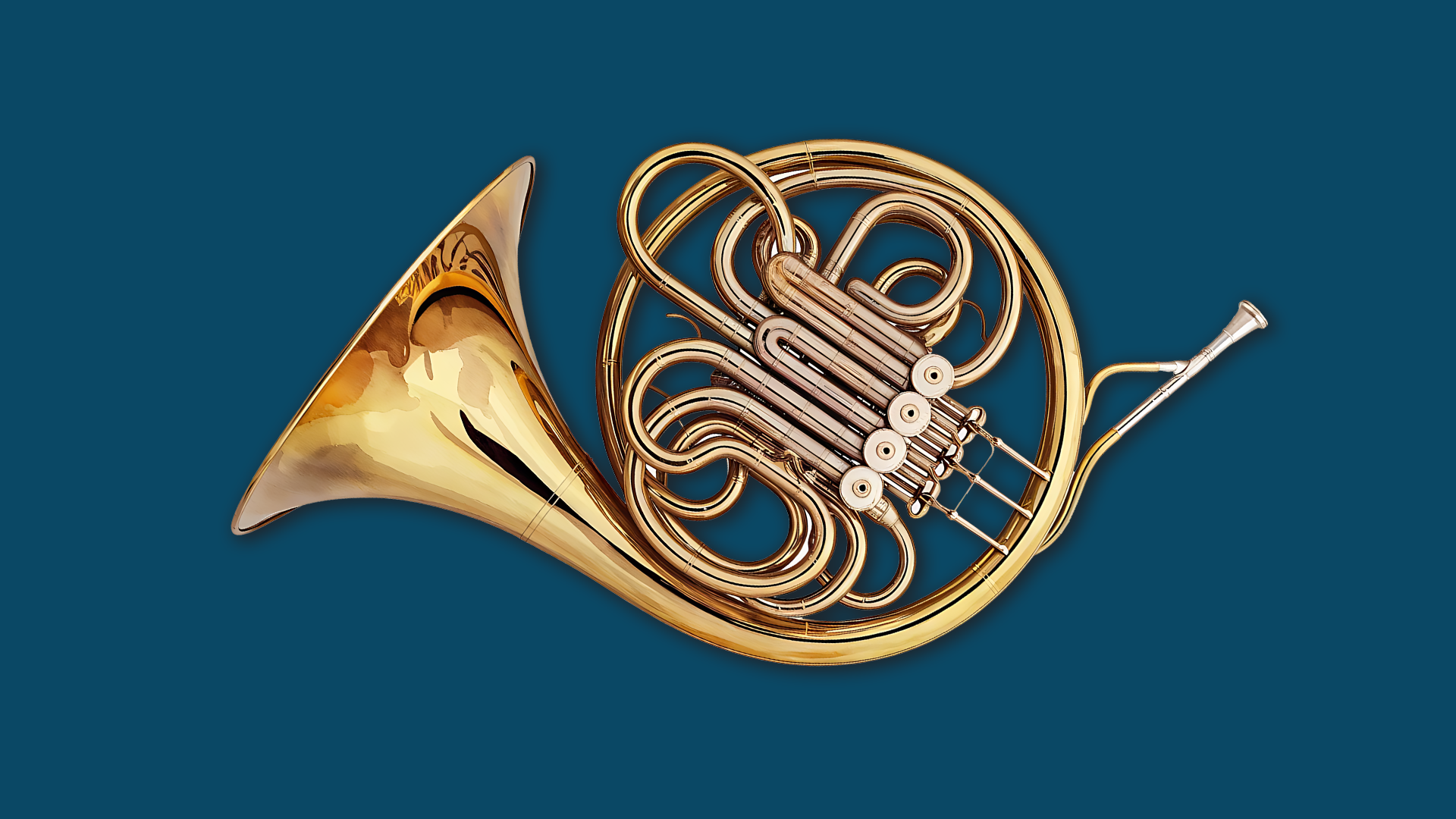
The French Horn is a brass instrument that is round and curled up. The end of it is shaped like a large funnel, which is called the “bell”. It is the most mellow sounding of the brass instruments.
The player uses their right hand inside the bell and their left hand to operate the valves. Pressing the valves changes the pitch, but players can also change pitch using the hand inside the bell. If you were to stretch out a French Horn, it would be about 12-13 feet long. A person who plays the French Horn is called a horn player.
WATCH THIS: Take a video tour of the French horn with Brett Hodge, principal Horn of the Omaha Symphony.
| Keyboard Shortcut | Action |
|---|---|
| Space | Pause/Play video playback |
| Enter | Pause/Play video playback |
| m | Mute/Unmute video volume |
| Up and Down arrows | Increase and decrease volume by 10% |
| Right and Left arrows | Seek forward or backward by 5 seconds |
| 0-9 | Fast seek to x% of the video. |
| f | Enter or exit fullscreen. (Note: To exit fullscreen in flash press the Esc key. |
| c | Press c to toggle captions on or off |
Meet the French Horn with Brett Hodge
Hi, my name is Brett Hodge and I'm the principal Horn of the Omaha Symphony.
And this is my horn.
This horn is what's called a double horn, meaning it sits in two different keys, but you can see I have four valves right here, and this is my mouthpiece, which comes in one piece.
Some mouthpieces come in two pieces or three pieces, but this one comes in one.
We have three parts here. We have the rim, which is on top.
We have the cup, which is in the middle, and then we have the shank, which is the bottom, the portion that goes into the mouthpiece.
One of my favorite things about playing the horn is that I can actually play the mouthpiece, and this is what the mouthpiece sounds like without the horn.
I can get all the notes and all the notes in between all the notes.
However, whenever I put it into the horn, it sounds like this.
So the horn has valves, right?
And so I like to think of the horn as an elevator every time I push down a valve.
We are getting off of a different floor on this elevator where the mouthpiece is kind of like an elevator that has no limits, but the horn makes it have a few limits, but just a little bit louder.
For example, if I were to play a C major scale, That's what it sounds like with valves just on the mouthpiece. It would be, Ah, ah.
So this horn is a double horn, which makes it sit in the key of F and the key of B flat.
Whenever I push the thumb down. Now, if you can see, it has all these different coils.
The top side is the F horn and the back side right through here is the B flat horn.
Now combined, we can use these for all different fingerings, and we've got so many different length of slides here that we, we can play as low as some tubas, and we can play as high as some trumpets.
So this is what makes the horn really unique.
EXPERIENCE THIS: Tour the French Horn in 3D space, learn more about this instrument.
Use the Notes feature below to answer the questions below. When finished, click the Save button to add to your "My Work" folder.
- What instrument part makes sound and is consistent throughout the full brass instrument family?
- How do you make sound with this piece of the instrument and what is that called?
- How do you change the length of the tubes with the French Horn?
- What keys does the double horn sit in?
Brett Hodge, the principal Horn of the Omaha Symphony, introduces his instrument, a double horn featuring four valves. He describes the mouthpiece, which is a one-piece component comprised of a rim, cup, and shank. One notable aspect of playing the horn is the ability to produce sound solely from the mouthpiece, demonstrating the range of notes achievable in this manner.

