HOW THE ORCHESTRA IS ARRANGED
An orchestra is set up to achieve a balanced sound that is projected out to the hall, with plenty of resonance coming from those string instruments. The high pitched instruments sit to the conductor's left with the lower pitched ones to his/her right. This gives an enhanced stereophonic effect to the sound of the orchestra and helps people understand complex musical textures.
A modern orchestra is a large instrumental ensemble that combines instruments from different families. Today, we’re focusing on the Brass Family, but don’t forget the Wind, Strings, and Percussion section!
EXPLORE THIS: Tour the orchestra with this Orchestra Map, learn and hear and sample of the individual String and Brass Instruments.
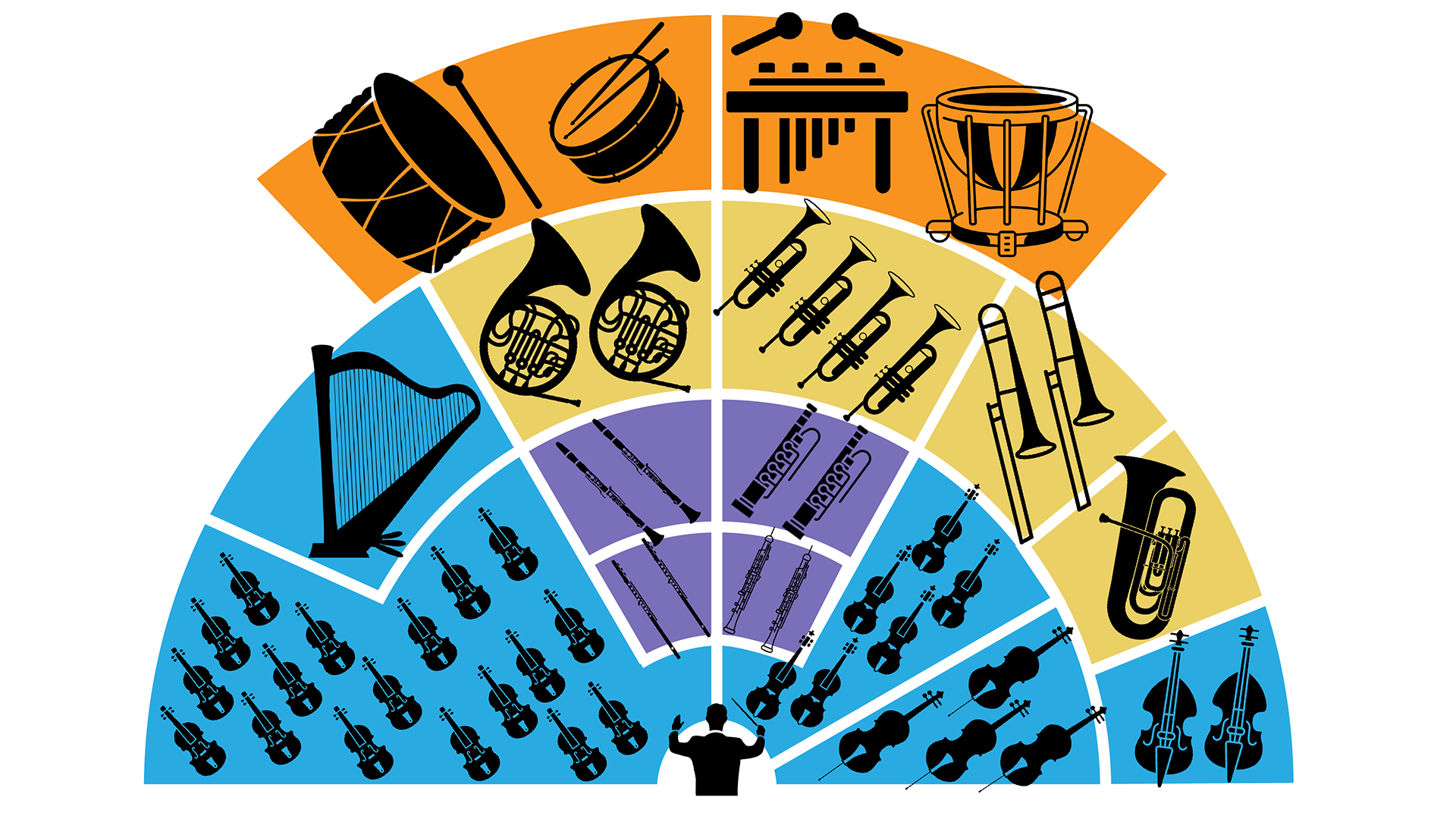
Free Play with the Map – ask students to do the following
- Identify each instrument of the brass family and their sounds
- Ask students if they have seen any of the brass instruments in person.
- Ask students which instrument makes the highest and which makes the lowest sound, and why that is possible.
- Ask students which of the brass instrument is their favorite and why.
Use the Notes Feature below to answer the questions below. When finished, click the Save button to add to your "My Work" folder.
- Why do they think the Orchestra is set up this way?
- What types of instruments are at the front, middle, and back of the Orchestra?
- Are the instruments grouped together by family? (string, brass, wind, percussion)
- Which section has the most players?
- Which section do you think is the loudest? Softest?
Brass and woodwinds
Brass instruments are loud and can be heard even if placed in the back. Woodwinds are more mostly smaller, more delicate-sounding, and closer in character to the strings, so they sit more towards the front. As with strings, they are arranged by pitch.
Strings
The string section is active a large proportion of the time, and therefore should be more interesting to look at. The basses, which are large in size and few in number, belong in the back, obviously. Arranging the string instruments by pitch makes conducting easier. The first violins should be showcased more than the second violins.
Percussion
Percussion instruments need to be at the back because, percussionists stand up, and sometimes cover more than one instrument. Large instruments, such as the timpani, gong, and chimes, would get in the way. Percussion parts are rarely the highlight of a piece.
Most orchestras use similar performance layouts for the simple reason that some instruments are louder than others, and it usually works best to place quieter instruments closer to the front of the stage and louder instruments closer to the back.

