INTRODUCTION - MEET THE ORCHESTRA
A modern orchestra is a large instrumental ensemble that combines instruments from different families. The modern orchestra has twelve main instruments, including the violin, viola, cello, double bass, flute, clarinet, oboe, bassoon, trumpet, french horn, trombone, and tuba. There is also a percussion section with instruments like the timpani, snare drum, xylophone and tambourine. In an orchestra there are four instrument families. These families are the strings, woodwinds, brass and percussion.
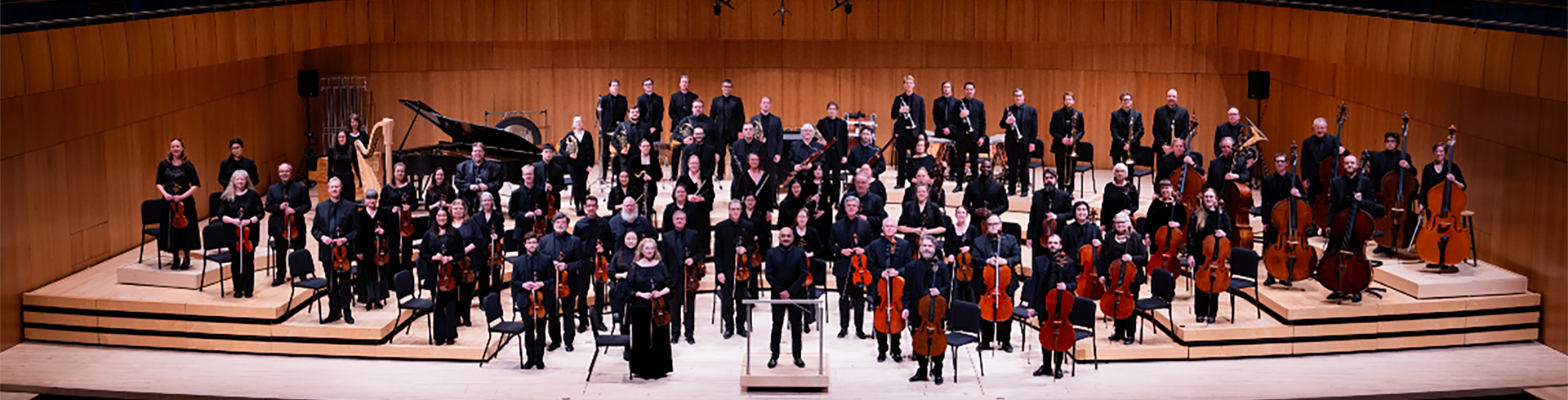
Use the Notes feature below to answer the questions below. When finished, click the Save button to add to your "My Work" folder.
- What instrument do you play, or are considering as part of an Orchestra?
- Who helped you with your instrument choice?
NOTE: The video on the right is Spanish only. See the transcript for English text.
WATCH THIS: This video provides a brief overview of the Orchestra as a whole, highlighting all four instrumental families which include the brass, woodwind, string and percussion families.
| Keyboard Shortcut | Action |
|---|---|
| Space | Pause/Play video playback |
| Enter | Pause/Play video playback |
| m | Mute/Unmute video volume |
| Up and Down arrows | Increase and decrease volume by 10% |
| Right and Left arrows | Seek forward or backward by 5 seconds |
| 0-9 | Fast seek to x% of the video. |
| f | Enter or exit fullscreen. (Note: To exit fullscreen in flash press the Esc key. |
| c | Press c to toggle captions on or off |
Meet the Instruments
CONDUCTOR: Hello everyone.
CONDUCTOR: Today we are going to talk about the instruments that make up the orchestra.
CONDUCTOR: There are several families.
CONDUCTOR: The brass family, the woodwind family, the string family, and the percussion family.
CONDUCTOR: The instruments of the brass family have been used for centuries.
CONDUCTOR: They would communicate using music from brass instruments each time
they went out for a hunt or when out on the battlefield.
CONDUCTOR: Instruments from the brass family are actually rolled tubes of different lengths.
CONDUCTOR: And we have the trumpet, the French horn, the trombone, and the tuba.
CONDUCTOR: These instruments are played with a mouthpiece, and depending on the different types of finger buttons sometimes there are pistons or there are valves for the French horn and the trumpet.
CONDUCTOR: And for the trombone there is a tuning slide that slides in order to produce the right note.
CONDUCTOR: Now I want to show you the woodwind family. These instruments also are wind instruments like the brass family.
CONDUCTOR: We have the sharpest instrument, which is the piccolo the instrument that produces the highest notes, and the deepest instrument, which is the bassoon, the instrument that produces the lowest notes.
CONDUCTOR: For example, the clarinet is an instrument that has several buttons that you can push to change the pitch of the notes.
CONDUCTOR: The clarinet produces sound through the reed in the mouthpiece but, for example, the flute makes sound with from air as it passes through the hole in the mouthpiece.
CONDUCTOR: The woodwind family we have, from the highest to the lowest, the piccolo, after that, the flute, the oboe, the clarinet, the bassoon.
CONDUCTOR: And in the next piece we will also be accompanied by the French Horn, which is also called the horn.
CONDUCTOR: Now we have the string family, the largest family. This family loves
to play everything together.
CONDUCTOR: We have the violins, the violas, the cellos, and the double basses.
CONDUCTOR: The mechanism that produces sound across all of these instruments is more or less the same. It’s a resonating box on top of which there are strings and that is played with a bow that produces the sound.
CONDUCTOR: In addition to producing the sound with a bow we are also able to produce a sound by plucking the strings with our fingers. The word that we use for this
Is “pizzicato”.
CONDUCTOR: We also have the percussion family. Any instrument that you can rip shake or hit is a percussion instrument and there are many.
CONDUCTOR: Similar to instrument families that we have previously mentioned the percussion family has to be very organized to help us maintain the rhythm.
CONDUCTOR: In this case we are going to hear instruments like the tambourine, the timpani, and the snare drum.
Orchestras are led by a conductor that directs the performance with hand movements and baton gestures. Most orchestras also have a Concert Master that is the first chair violin player that leads the musicians in tuning at the top of a concert as well as playing passages together.

