Financial Costs of Nuclear Weapons
Nuclear weapons are expensive. For both Pakistan and North Korea, nuclear weapons have been prioritized even while their citizens have faced profound hardship. Wealthier nations have spent enormous sums that some argue could have funded other important issues.
An opportunity cost is the cost of what is missed or given up when money is invested in an alternative. For example, if you have limited money, spend it all on shoes, and then have no money to purchase headphones, the opportunity cost of the shoes is no new headphones. By investing in nuclear weapons, nuclear nations experience the opportunity cost of spending less on alternative programs.
Pakistan
Pakistan has high poverty and illiteracy rates yet spends about a billion dollars annually on nuclear weapons. Sharing a tense border with nuclear-armed India, Pakistan became a nuclear nation in 1998.
–President Bhutto, several years prior to becoming president and starting the nuclear weapon development program in Pakistan
North Korea
North Korea has endured years of poverty and famine while prioritizing nuclear weapon development. North Korea tested its first nuclear weapon in 2006 and continues to build its arsenal despite food shortages and limited basics, including electricity. North Korea spends about $600 million annually on nuclear weapons.
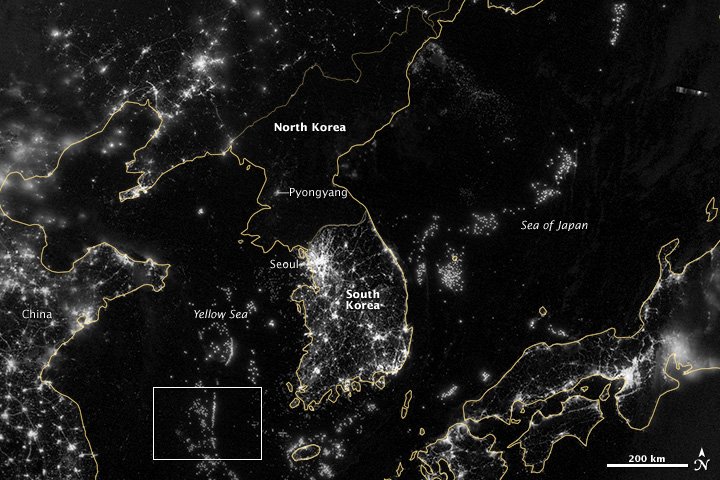
Map of North Korea highlighting limited electricity versus neighboring nations.
United States
The United States spends more than any other nation on its military in general, as well as on nuclear weapons specifically. U.S. nuclear spending is greater than nuclear spending by all other nuclear nations combined and is projected to total at least 1.5 trillion dollars in the next 30 years.
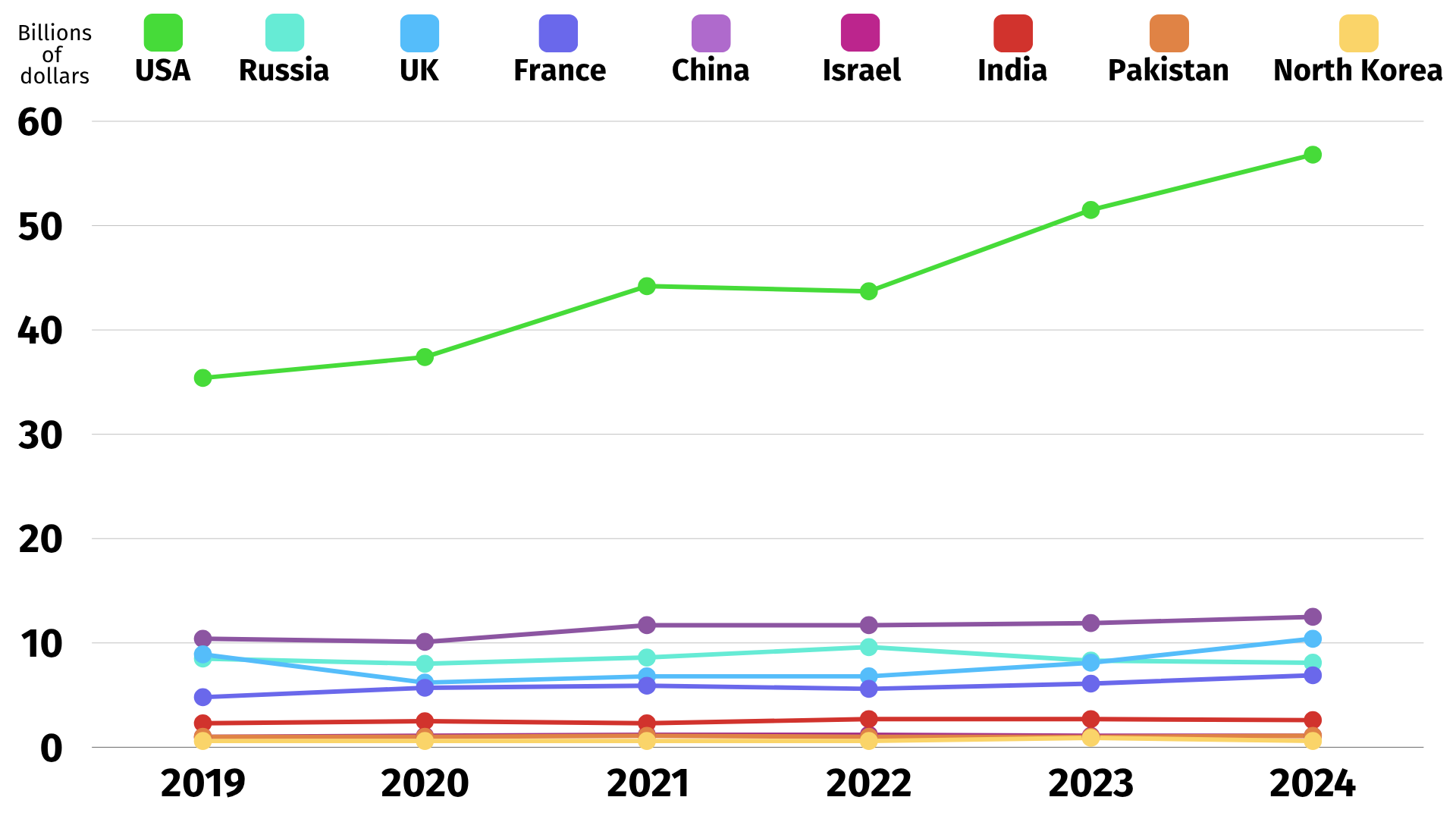
Nuclear spending in billions of dollars by nation, 2019–2024.
Take notes
What are the opportunity costs of nuclear spending for each of the following nations? For Pakistan and North Korea, use the reading to explain the opportunity costs. For the United States, describe what other spending alternatives you think could be considered for this money.
