Environmental Risks of Nuclear Weapons and Testing
Radiation harms the environment, which in turn can harm humans when they eat food or drink water from contaminated sources, absorb dangerous chemicals through the skin, or breathe air with fallout contaminants.
Atomic Tuna
The United States detonated its largest nuclear bomb, Castle Bravo, in 1954, with catastrophic consequences. The strength of the detonation was far larger than expected. Wind shifts brought extensive fallout to nearby inhabited islands, leading many to describe Castle Bravo as an accident rather than a test. All 23 fishermen on a nearby Japanese boat, the Lucky Dragon No. 5, received massive doses of radiation and became ill: one died of acute radiation poisoning while others experienced long-term health issues. Their tuna, also on board and contaminated, was described as “atomic tuna” and discarded. Fallout effects on humans and food sources raised Japanese concerns over nuclear weapon testing.
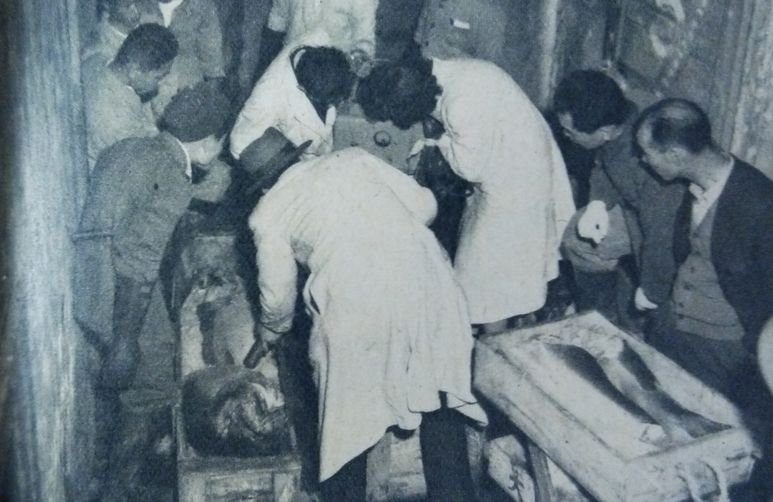
A 1954 Japanese inspection of “atomic tuna” after the Castle Bravo test in the Marshall Islands.
Radiation Island
Montebello Island, off the coast of Australia, was used by the United Kingdom for testing in the 1950s. Over 60 years later, visitors are cautioned not to spend more than one hour on the island nor to pick up any objects because of radiation concerns.
Treaties
Several treaties limiting nuclear testing have widespread support. In 1963, the Partial Test Ban Treaty stopped most atmospheric testing, and the 1996 Comprehensive Test Ban Treaty bans all nuclear explosions. While not every country officially supports these treaties, a majority of nations agree to their terms. Testing has fallen to near zero, compared to hundreds of tests each decade from the 1950s through the 1980s.
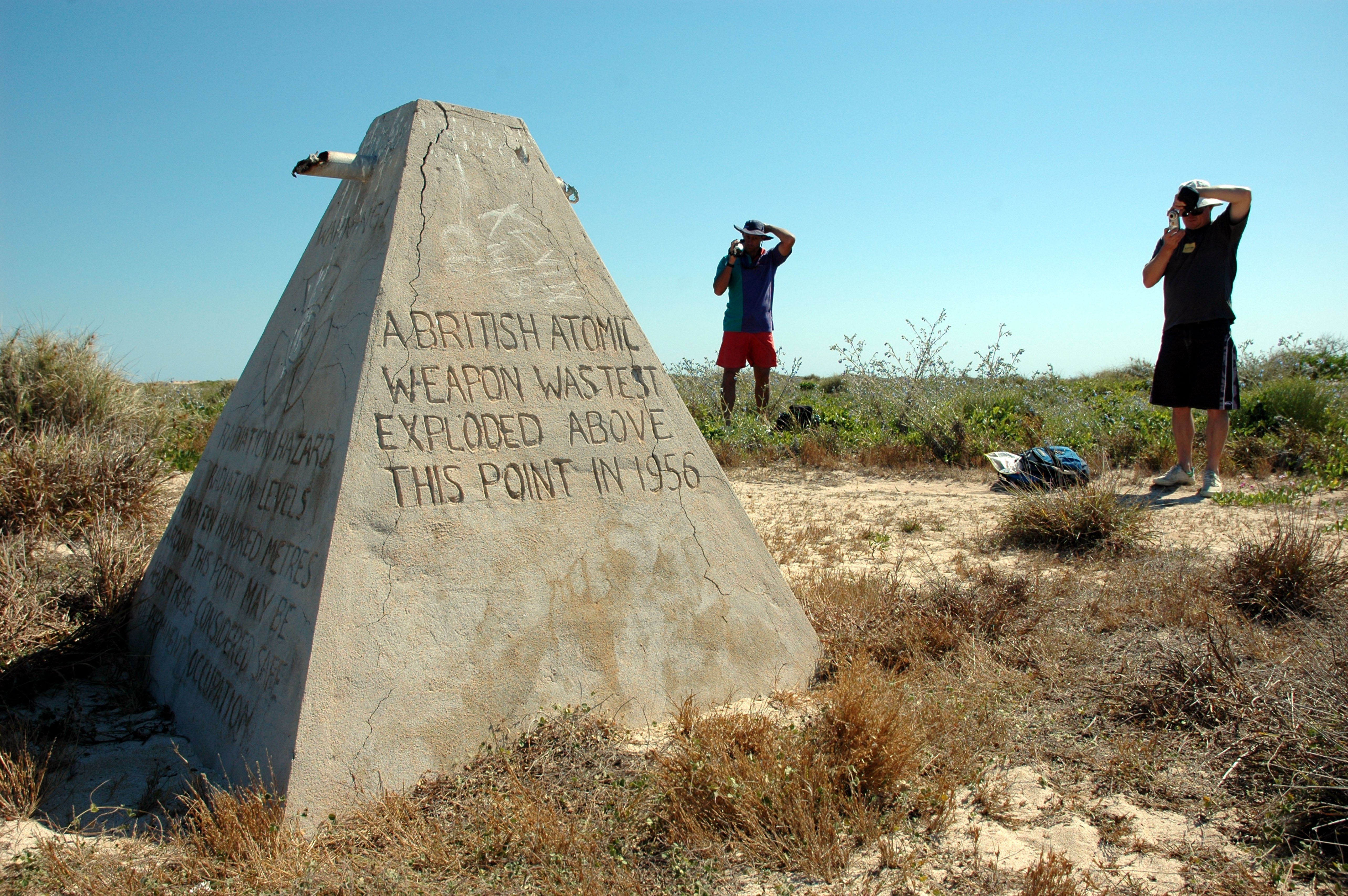
A monument on Montebello Island indicating the site of British nuclear weapons testing.
