Introduction
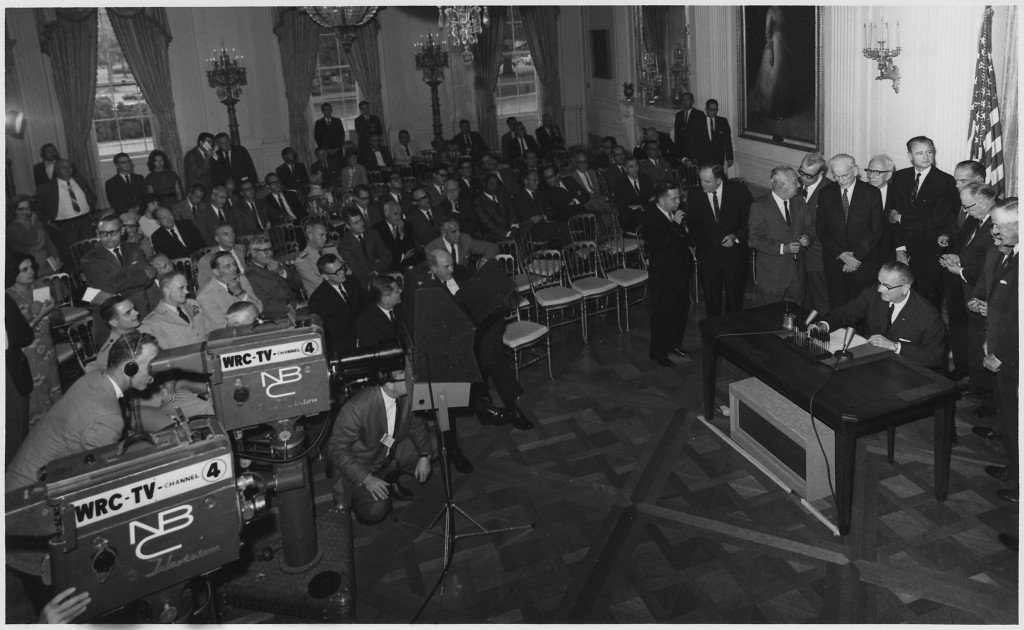
By 1964, ongoing violence in Vietnam, and the assassination of South Vietnamese President Diem the previous year, suggested to U.S. analysts that the North would prevail throughout all of Vietnam unless the United States intervened.
President Lyndon B. Johnson felt both that World War II and its aftermath had taught us to never give in to tyrants, and that Communist governments must always be opposed. At the same time, he could not see the value of putting American lives at risk, confiding to his friend Senator Richard Russell that his conscience argued against sending a sergeant and father of six whom he knew into combat. Johnson's military advisers predicted that a commitment of at least five years and 500,000 troops would be required, and they were unable to provide a strategy to allow America to both withdraw and still save face, particularly in light of commitments from prior U.S. presidents.
The only dissenter was Undersecretary of State for Economic and Agricultural Affairs George Ball, who felt that the proper course was withdrawal, even if it meant the fall of the South Vietnamese government. Yet Johnson feared being seen as appeasing the North Vietnamese, as Britain had appeased Nazi Germany at Munich in 1938. He also erroneously assumed that North Vietnam, China, and the Soviet Union formed a monolithic Communist force. With assurance from Secretary of Defense Robert McNamara that victory could be won in two and a half years, Johnson chose to expand the war, a decision that led to 58,000 U.S. fatalities and added significantly to the total fatalities of over two million Vietnamese between 1961 and the war's conclusion in 1975.
The Gulf of Tonkin Incident, in August of 1964 is now seen as the turning point in Johnson's attitude toward the war.