Nuclear Energy Basics
After developing nuclear weapons, scientists and governments worked to apply their knowledge to peaceful purposes, including nuclear energy which uses a controlled nuclear reaction. As of 2023, over 30 countries use nuclear power plants to produce electricity. Nuclear energy is controversial; opinions vary concerning whether its benefits outweigh its risks.
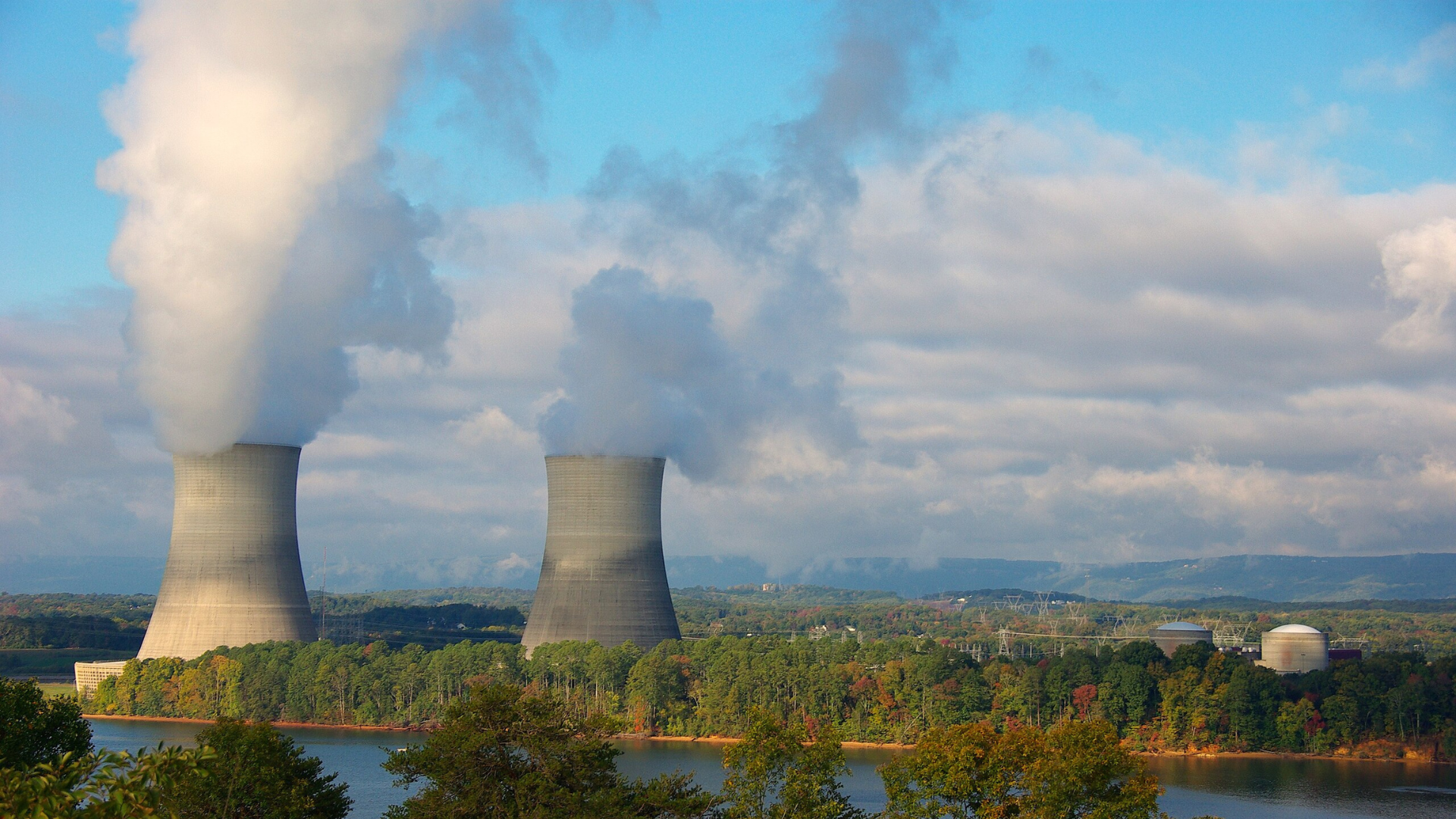
Nuclear reactors at Sequoyah Nuclear Power Plant in Tennessee.
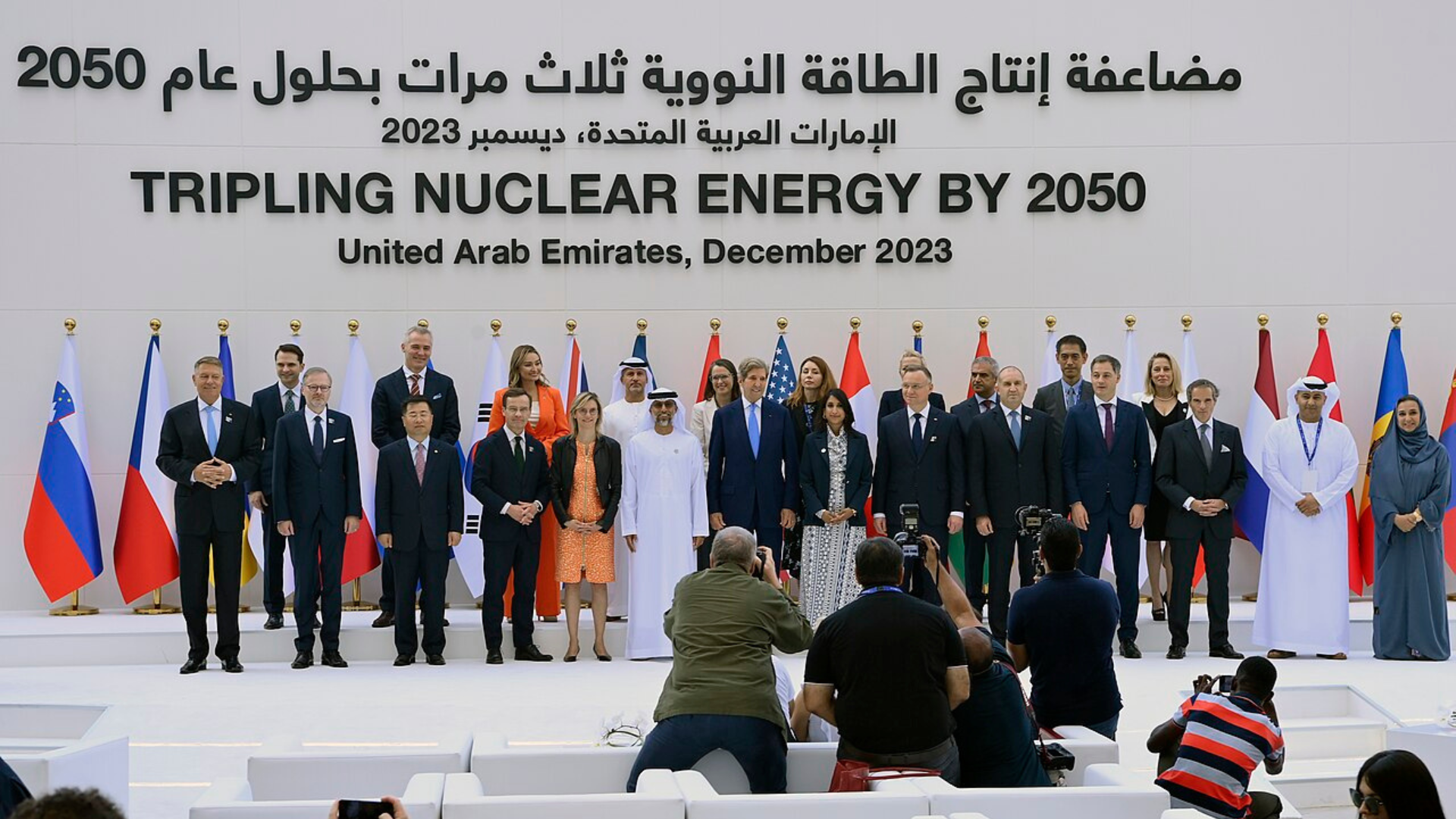
2023 U.N. climate meeting, which established new nuclear energy goals.
Nuclear energy development is a strategy for combating climate change. At a 2023 U.N. climate conference, 22 nations (including the United States) pledged to triple their nuclear energy capacity by 2050, because this energy is considered relatively reliable and clean. It does not create the same climate change challenges as fossil fuels like oil and coal, nor does it depend on sunshine or air movement like solar or wind power.
Nuclear energy does have risks. For example, with misuse, sabotage, or natural disasters, nuclear reactors can release dangerous radiation, causing local catastrophic environmental and human health concerns (like in Chernobyl, Russia, in 1986, and Fukushima, Japan, in 2011). Nuclear power proponents argue, however, that newer reactors are safer than older structures and that nuclear energy is a viable option for energy as climate change concerns mount.
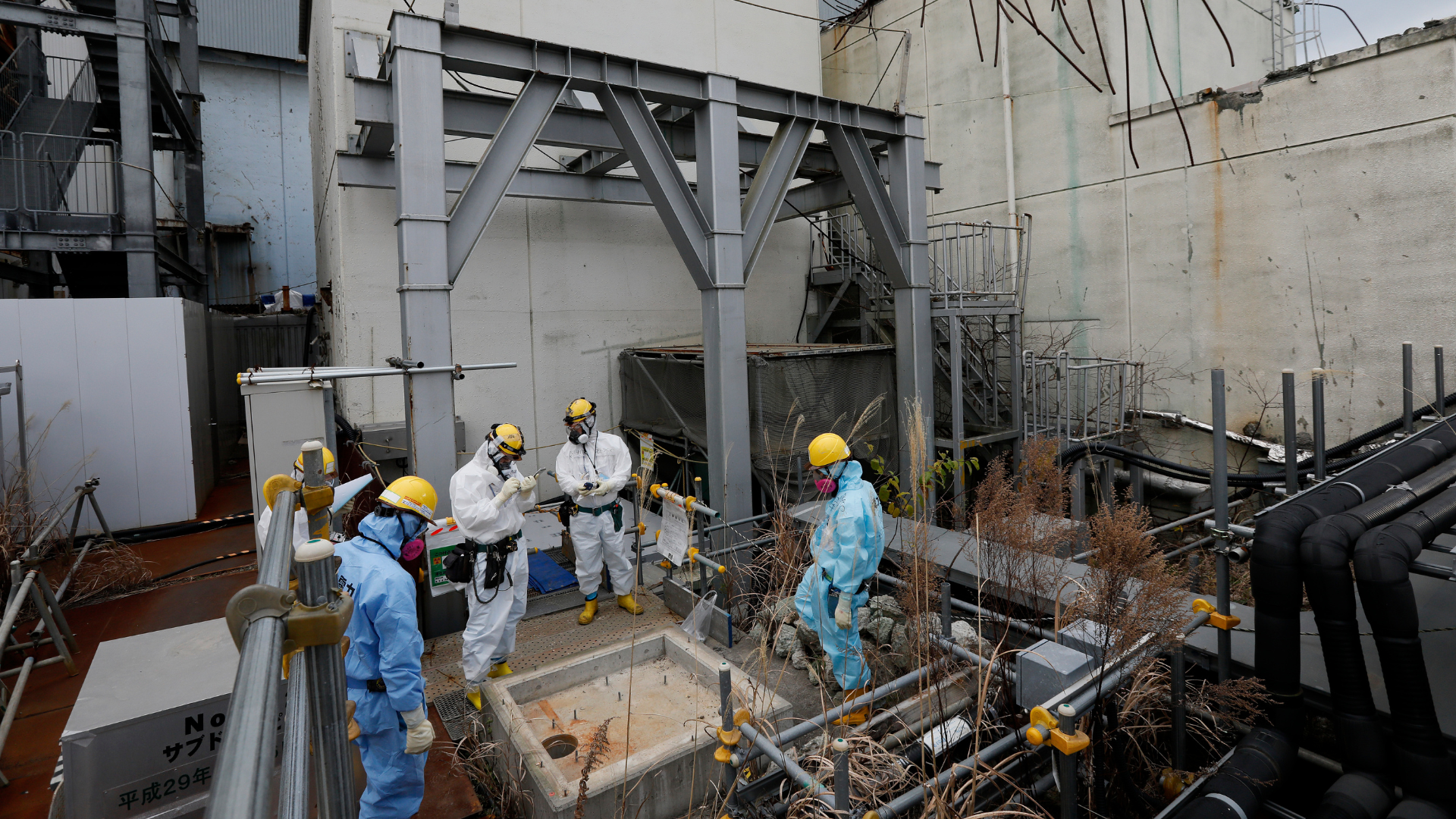
Workers in protective gear assessing damage to a nuclear power plant in Fukushima, Japan.
Take notes
Begin filling out the chart below by listing two benefits and one risk related to nuclear energy development. You will continue filling out this chart on the next page.
