Abraham Lincoln and the Declaration’s Rebirth
For decades after the American Revolution, little attention was given to the Declaration of Independence, as it seemed to have served its primary purpose. The document itself fell into disrepair. The original document was not printed on a particularly good sheet of parchment, was frequently moved about and treated with little thought to its preservation, and was already in bad shape by the early 1800s. The Declaration of Independence, today housed in the National Archives Museum, with the most sophisticated security and preservation systems, was “one of the most abused documents in the history of preservation . . . battered and bandaged since its birth.”
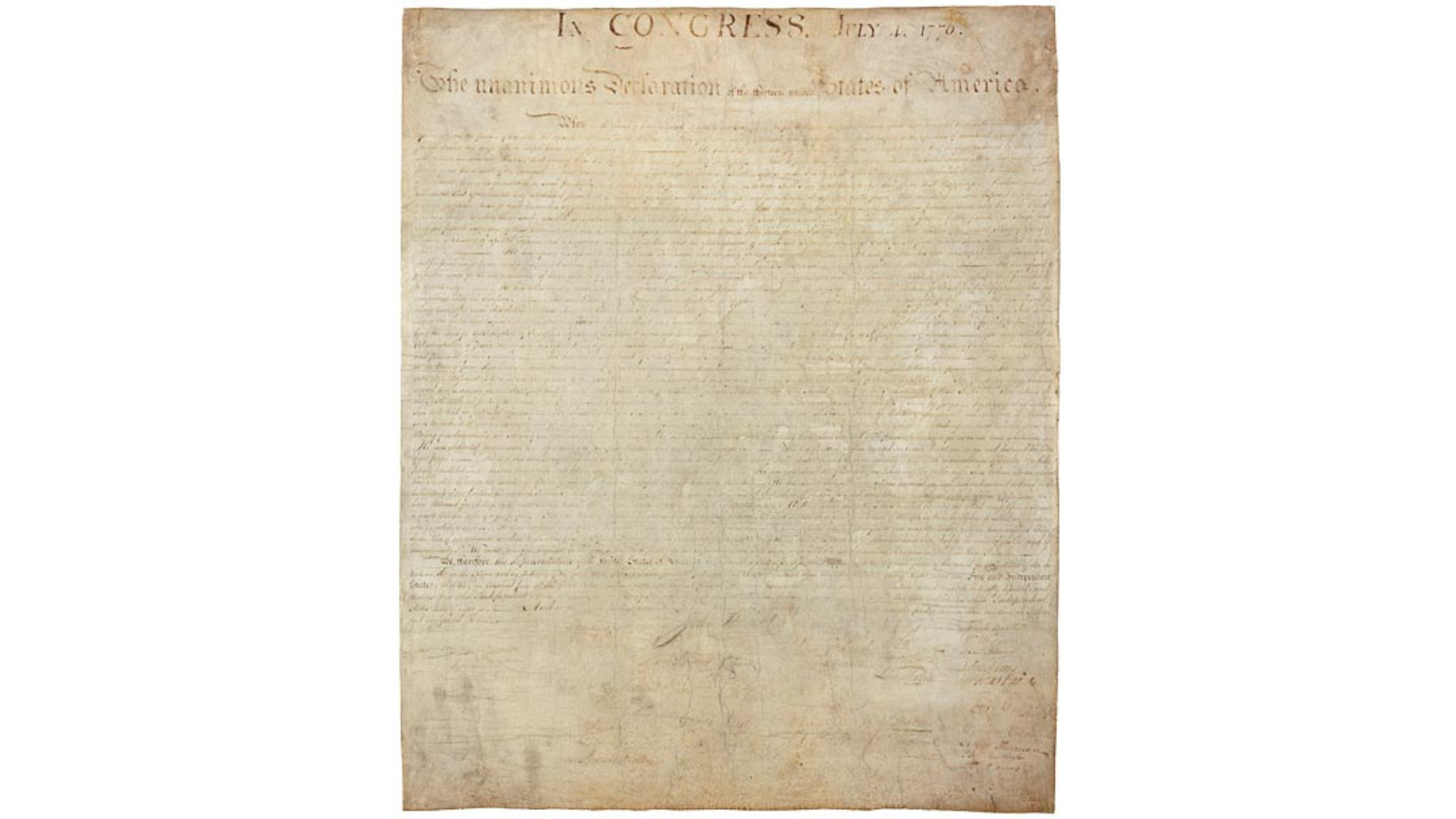
Original copy of the Declaration of Independence, July 4, 1776.
One event credited with generating interest in the Declaration of Independence is the Gettysburg Address, delivered by Abraham Lincoln on November 19, 1863 at a dedication ceremony for a national cemetery near the Gettysburg battlefield. In his speech, Lincoln echoed the Declaration of Independence’s words and ideas.
Read the sentences below from the Gettysburg Address. In the chart provided, explain the connection between Lincoln’s ideas and those in the Declaration of Independence.
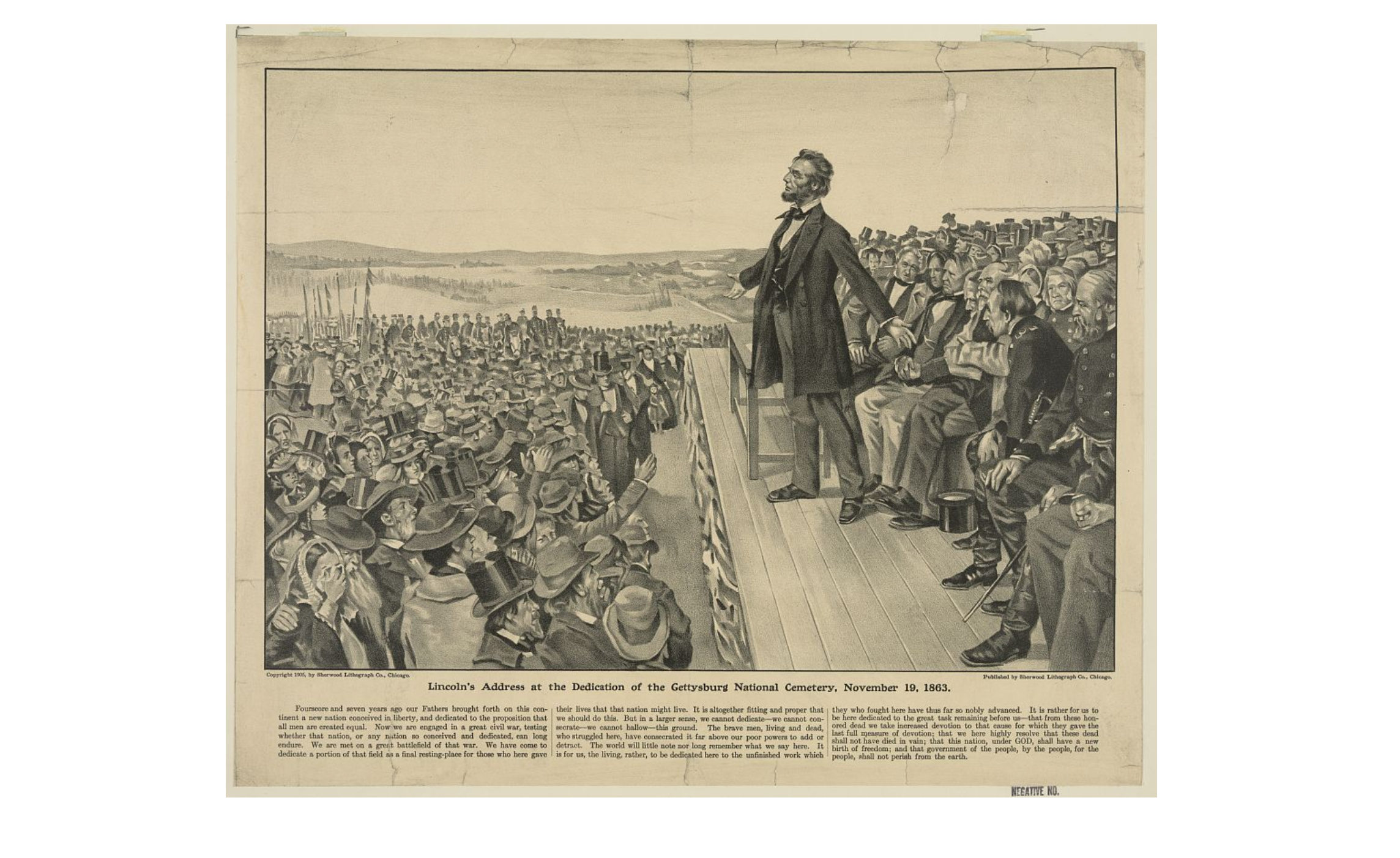
Lincoln's address at the dedication of the Gettysburg National Cemetery, November 19, 1863.
Lincoln effectively framed the Civil War’s purpose as an opportunity to realize the ideals established in the Declaration of Independence, specifically its assertions of human equality, inalienable rights, and government by consent. Today, the Declaration of Independence is remembered not as a revolutionary manifesto, but as the document that captures America’s ideals.

