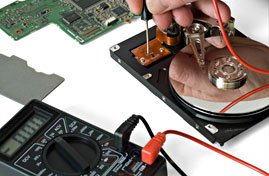
Troubleshooting Skills
You have seen how Travis and Monica have learned enough about how their equipment works that they can fix or “debug” problems as they arise. Troubleshooting is figuring out the cause of the problem when things aren’t working right. Good troubleshooters are able to think about their systems as a whole, know the systems’ components, and conceptualize how these components interact to produce an output. They can then apply their skills to develop a process that solves the problem.
Write down some ways for your students to practice troubleshooting. For example, in a high school classroom, you might be able to troubleshoot an electric circuit or analyze a simple computer program that contains a glitch. First, give students a diagram that explains the system design. Next, present them with a “problem”—something that is not working within that system. Have students determine where things may have gone wrong, explain their reasoning, and recommend how to fix the problem.