Introduction
In 1776, American colonists declared independence from Great Britain, choosing to engage in war to secure it and daring to build a republic in the new nation. Born out of violence, fierce debate, and uneasy compromise, this experiment in democracy was unprecedented: people uniting to defend the unalienable rights of all.
Rare for the time, people from different colonies—divided by background, faith, and way of life—united not through a shared history, religion, or language, but through a common purpose: to create a government by consent of the governed, dedicated to protecting unalienable rights. These principles are the foundation of American democracy.
Across the colonies, voices differed as to what this new democratic republic would look like and how it would work. While the American democratic experiment was built on powerful ideals such as life, liberty, and the pursuit of happiness, those promises were not fully realized for everyone during the Founding Era and beyond. Enslaved people, Indigenous nations, and women were among those excluded from these rights. This contrast between the nation’s stated ideals and its early realities reveals the complexities and contradictions of the time.
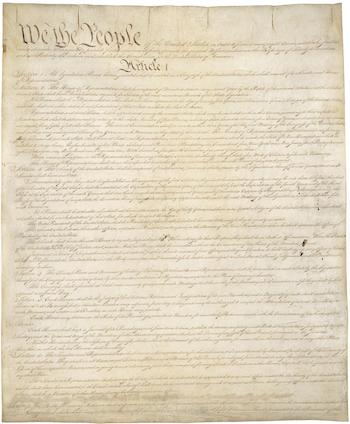
The Constitution of the United States of America, 1787. Constitutional Convention, handwritten. Page 1 of 4.
Essential Question
What did democracy mean to Americans during the Founding Era?
In this interactive lesson, you will step into the Founding Era to explore multiple perspectives and hopes for American democracy.
As you engage, you will:
- Identify the hopes and ideas for American democracy of each group or individual.
- Note the key principles of American democracy each group or individual championed. Key principles are the most important ideas or values that form the foundation of the United States of America.
- Note the challenges to democracy revealed by each group or individual.
At the end of the interactive lesson, you will respond to the essential question by writing a short response using evidence gathered during the interactive activity.
