The Fourth Amendment
Text Explained
People have the right to be secure in their homes, belongings, and private property. The government can’t search a person’s property or seize their possessions without a good reason to believe that a crime has been committed and that the search will uncover evidence related to that crime. A judge determines whether a good reason exists and issues a warrant if they think one does.
Historical Context
The American Framers were influenced by the English belief that “a man’s home is his castle” and that there should be special protections for a citizen’s private property. During the years leading to the Revolutionary War, however, British customs officials were granted writs of assistance, a type of search warrant with broad rights to search the homes, offices, shops, warehouses, and ships of suspected colonial smugglers. Officials did not need to show probable cause nor specify exactly what they were searching for. Once a writ had been issued, it could be used repeatedly; in other words, the official did not need a magistrate, or judge, to approve of every search.
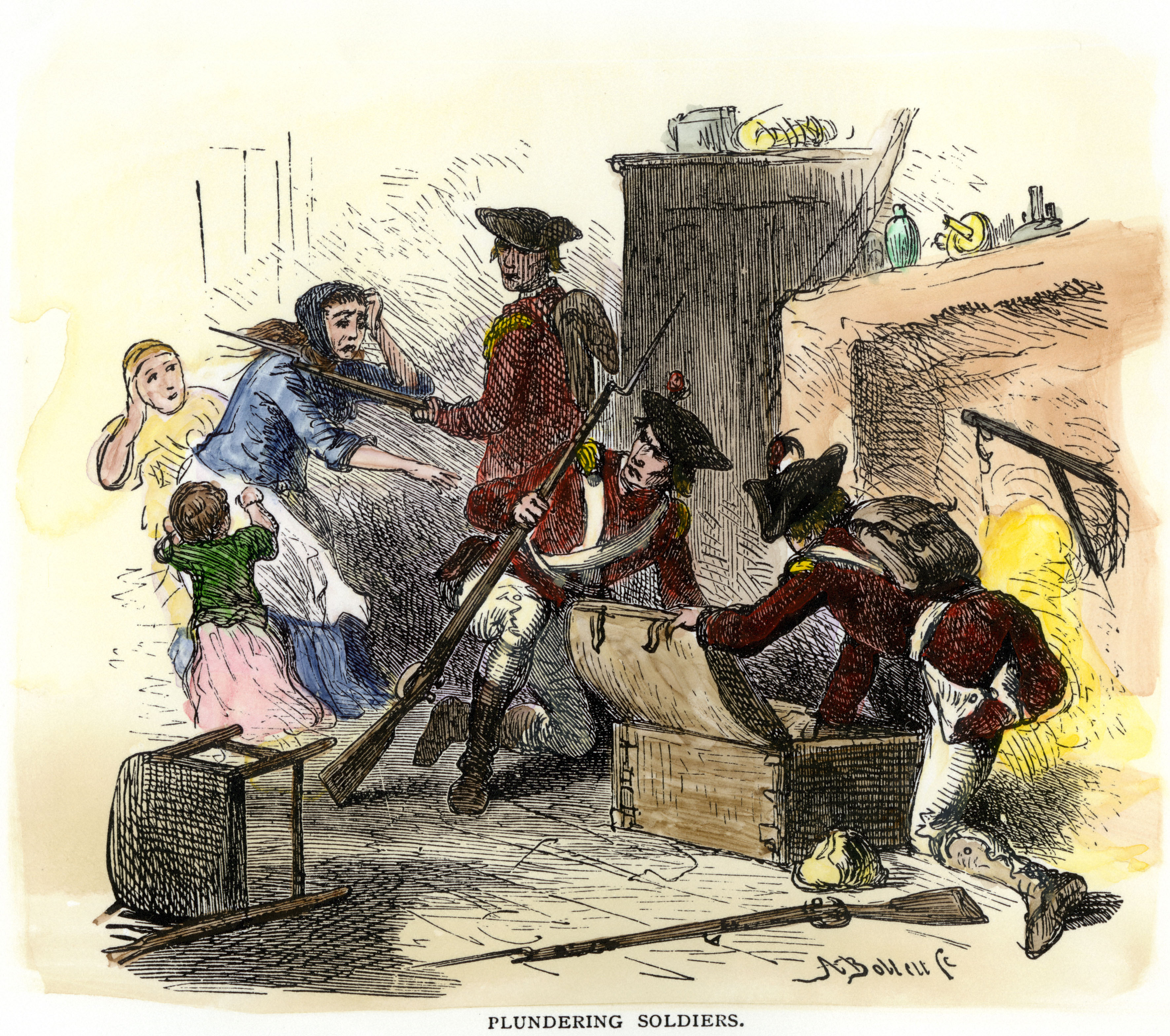
British soldiers plunder a colonist's home, 1700s.
Take Notes

