The Nature of Atomic Weapons
Atomic vs. Conventional Weapons
What was known about atomic weapons in 1945? Were they considered “super bombs,” bigger and more effective conventional bombs, or viewed as something new and different?
–President Harry S. Truman
–Senji Yamaguchi, a 14-year-old boy working for the Mitsubishi Arms Manufacturing Works just 10 blocks from ground zero in Nagasaki
The “Trinity” Test
The first and only test of an atomic bomb occurred on July 16, 1945, in the desert plains of New Mexico at the Alamogordo Bombing Range. The atomic bomb released so much heat that it vaporized the metal tower that had held the device and turned the surrounding asphalt and sand into green glass. Seconds after the explosion came an enormous blast, sending searing heat across the desert and knocking observers to the ground.
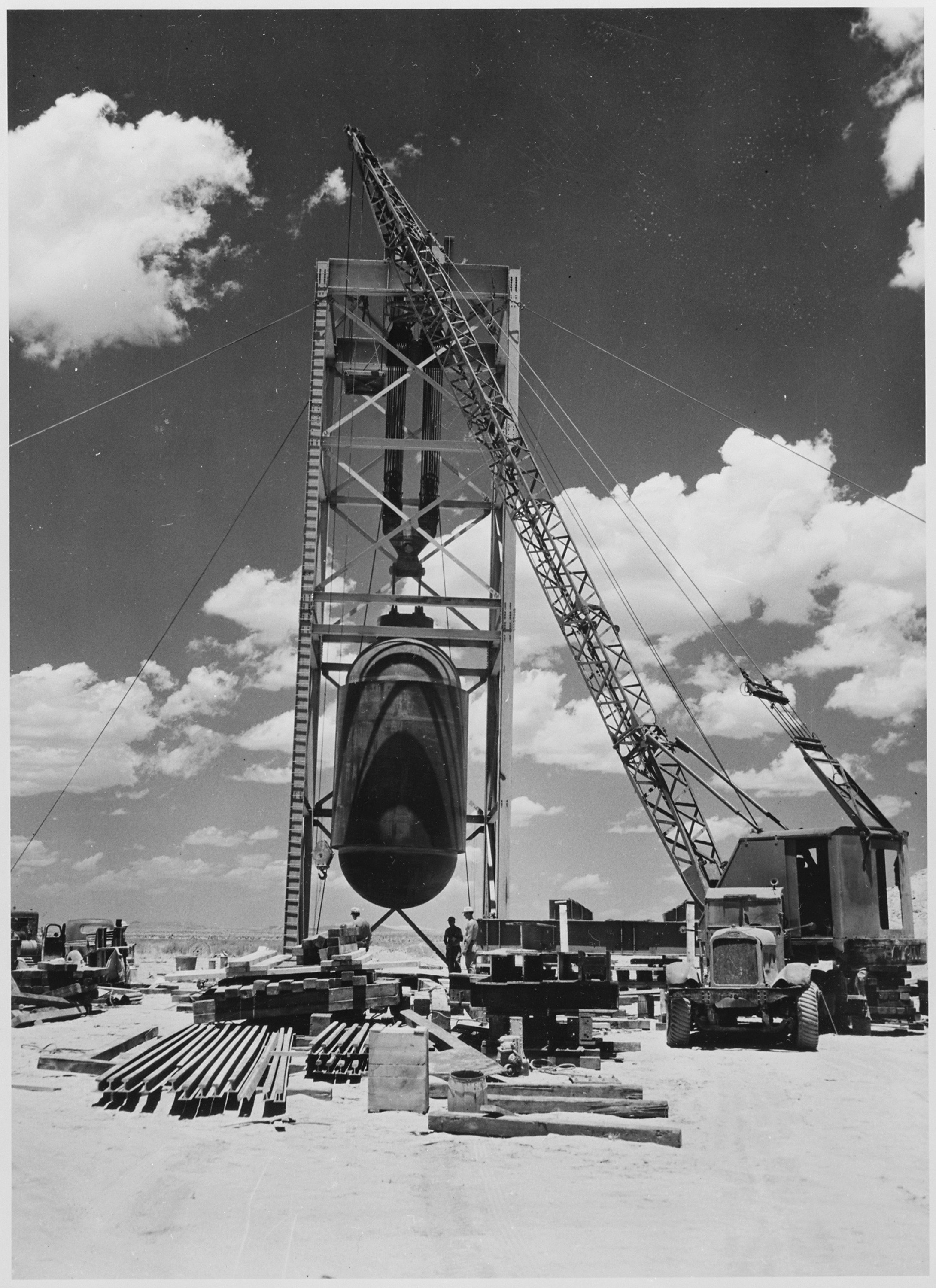
Installation of Jumbo prior to the Trinity test.
Prior to the Trinity test, scientists were aware that the blast would create potential radiation hazards, but the exact range and type of radiation exposure were unknown. Monitoring after Trinity showed that radioactive fallout from the blast extended over a larger area than anticipated; while no people displayed immediate signs of dangerous exposure, livestock suffered “skin burns, bleeding, and loss of hair.”
It took decades to develop a more detailed understanding about radiation (e.g., its health effects on people, its environmental impacts, the potential for widespread nuclear fallout), but scientists had a basic understanding of the radioactive dangers associated with atomic bombs.
Take Notes
Do you think that Truman should have ordered the use of a weapon whose effects were not yet fully understood? Explain your answer below.

