Study Titan's Topography
The principle of uniformitarianism states that natural processes are the same across time and space. The processes that occur now are the same processes that occurred in the past, and they are the same throughout the universe. Geologists apply the concept of uniformitarianism to understand the origins of landforms and to interpret the geologic record. Uniformitarianism applies to both gradual change, such as erosion and tectonics, and catastrophic change, such as an asteroid impact.
Comparative planetology is the study of the similarities and differences among planets. It makes use of our understanding of geological processes on Earth to help study the terrain on worlds as different as Saturn's moon Titan, where it is too cold for liquid water to exist. Although there is no liquid water on Titan, another fluid such as liquid methane or ethane could create landforms in the same manner that water acts on Earth.
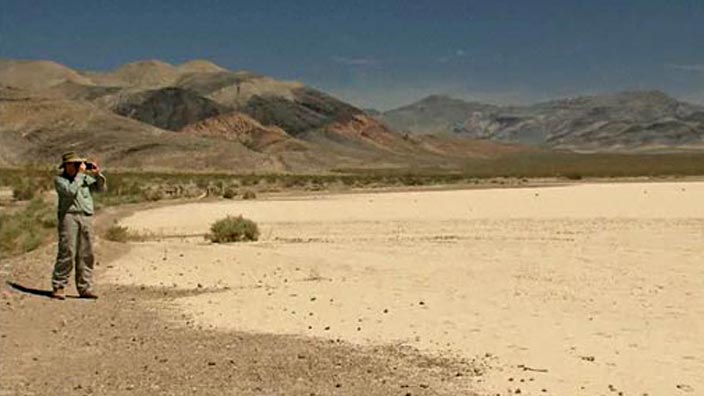
Explore this interactive activity about the topography of Titan.
What does the statement “Geology is geology everywhere.” mean? How can knowledge about Earth be used to interpret observations of distant solar system objects? Write your response in the notes box below.
