Lesson Review
Here's a chance to review many facts and concepts discussed in this interactive lesson, and also to organize your notes for your final project.
For a basic review of this lesson's three animations, click on the Arrange It box below. You'll find a chart with three categories--"Heat Islands," "Tree Superpowers," and "Urban Forests"--and 18 cards that need to be categorized. Drag each card to its correct category.
For your convenience, all of this lesson’s videos, transcripts and glossary words with definitions are posted at the bottom of this page.
| Keyboard Shortcut | Action |
|---|---|
| Space | Pause/Play video playback |
| Enter | Pause/Play video playback |
| m | Mute/Unmute video volume |
| Up and Down arrows | Increase and decrease volume by 10% |
| Right and Left arrows | Seek forward or backward by 5 seconds |
| 0-9 | Fast seek to x% of the video. |
| f | Enter or exit fullscreen. (Note: To exit fullscreen in flash press the Esc key. |
| c | Press c to toggle captions on or off |
The world is getting hotter, but not at the same rate in all places. Different landscapes, areas and regions are taking the brunt of the global temperature increase.
One area at risk of higher temps are cities and urban areas - this is called the Urban Heat Island Effect – the temperature increase caused by things like buildings, roads, concrete, and other materials all in a dense and compact area.
These urban materials do a few things to increase heat:
They absorb and store heat.
They radiate heat.
They can reflect heat – which leads to more absorption and radiation by other objects.
They are impermeable. They don’t soak up moisture, which means they lose out on the cooling effects of evaporation.
They reduce wind flow.
And urban environments produce heat. Things like cars, A/C units, and all the machines we use to make our lives convenient and keep ourselves cool, actually create more heat.
All of this can increase temps up to 7℉. It might not seem like much, but as temps climb higher, it is the difference between just plain hot & dangerous.
And heat islands create a vicious cycle- heat leads to more use of energy which leads to more heat, which impacts the health and lives of more than half of all humans on the planet.
| Keyboard Shortcut | Action |
|---|---|
| Space | Pause/Play video playback |
| Enter | Pause/Play video playback |
| m | Mute/Unmute video volume |
| Up and Down arrows | Increase and decrease volume by 10% |
| Right and Left arrows | Seek forward or backward by 5 seconds |
| 0-9 | Fast seek to x% of the video. |
| f | Enter or exit fullscreen. (Note: To exit fullscreen in flash press the Esc key. |
| c | Press c to toggle captions on or off |
Trees have a superpower. Not only do they feed us, and generally make our lives easier. Trees make our urban environments safer for us to live in and they do this in a few different ways.
Trees keep things cool.
In the heat-trapping/radiating/producing urban environment, trees provide shade.
Trees provide surface area (soil, leaves, branches, etc) for the cooling effects of evaporation.
And trees transpire (transpiration) - basically the vegetative version of sweating. Water is absorbed through roots, released through leaves, and evaporates, taking heat with it.
Trees can reduce surface temps a whopping 20 ℉ (12 celsius) when conditions are right.
Trees keep things clean.
They absorb CO2 and other greenhouse gasses, they release oxygen, and they filter the air of numerous pollutants, all of which improves air quality.
Trees also do the same with water. They soak up excess stormwater, so things don’t flood, and they filter that water as they do, which improves water quality.
And trees keep things beautiful. Whether it’s providing habitat for wildlife, or boosting our mood, trees provide more for our well-being than we might realize.
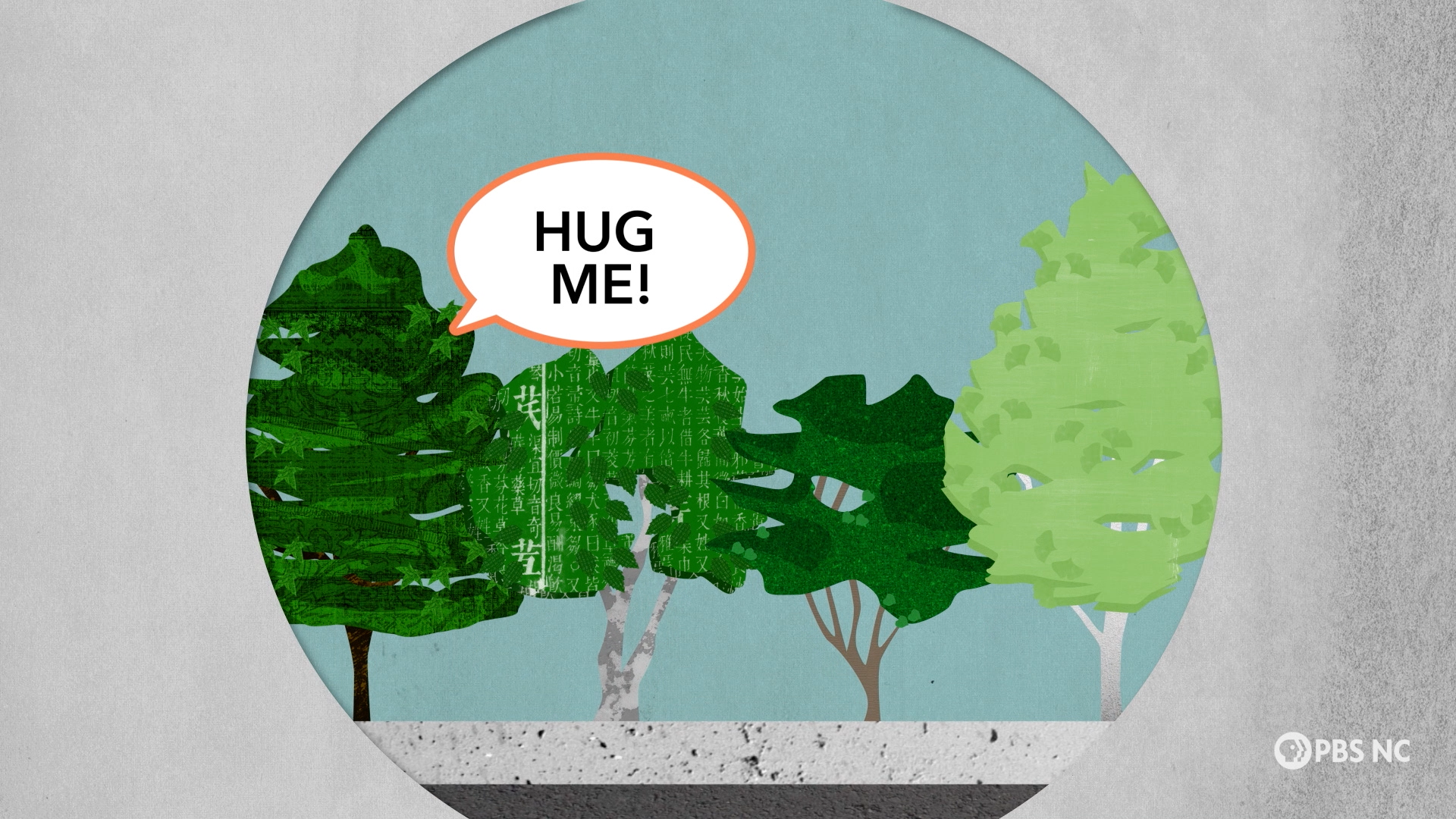
So go ahead, hug that tree.
| Keyboard Shortcut | Action |
|---|---|
| Space | Pause/Play video playback |
| Enter | Pause/Play video playback |
| m | Mute/Unmute video volume |
| Up and Down arrows | Increase and decrease volume by 10% |
| Right and Left arrows | Seek forward or backward by 5 seconds |
| 0-9 | Fast seek to x% of the video. |
| f | Enter or exit fullscreen. (Note: To exit fullscreen in flash press the Esc key. |
| c | Press c to toggle captions on or off |
Urban forests are trees and vegetation in urban environments. And with all their plant superpowers, urban forests can make a very big impact on quality of life in the city.
So is the answer trees, trees, and more trees? Not quite.
Urban forests have a few caveats to consider:
Urban environments are stressful and cramped. And you have to have the right type of tree to deal with those conditions. If the right tree is in the right place, everyone is happy.
It takes money to maintain, water, and keep trees happy. Cities and residents need to allocate money for the lifetime of the tree, which can span generations.
In cities things are always changing. Trees however can’t just be uprooted. It takes thoughtful, long-term planning to keep urban forests thriving.
The bottom line is that urban forests don’t just happen. They are made by humans. Which means we (citizens, urban foresters, city leaders) are responsible for preserving the trees we have, and expanding our urban forests as our cities expand.
So if we have to pave paradise, we can always plant a forest.
