Introduction
Dr. Martin Luther King, Jr., visited Chicago in 1966 to bring national attention to the discrimination and racism, poverty and deplorable living conditions, and widespread segregation experienced by the city’s African American residents. What particularly alarmed him was the level of racial violence that he faced during a march through Chicago’s streets. He, along with 30 marchers, had suffered injuries after being physically attacked and verbally taunted by White Chicagoans. When interviewed about his experience, Dr. King stated, “I have never in my life seen such hate . . . not in Mississippi or Alabama.” Racial violence was not new to Chicago. Since the Great Migration, Chicago had been a hotbed of racial tension. White residents both feared and resented the growing number of Black people who were moving to the area for better wages and to escape the racial discrimination of southern Jim Crow laws.
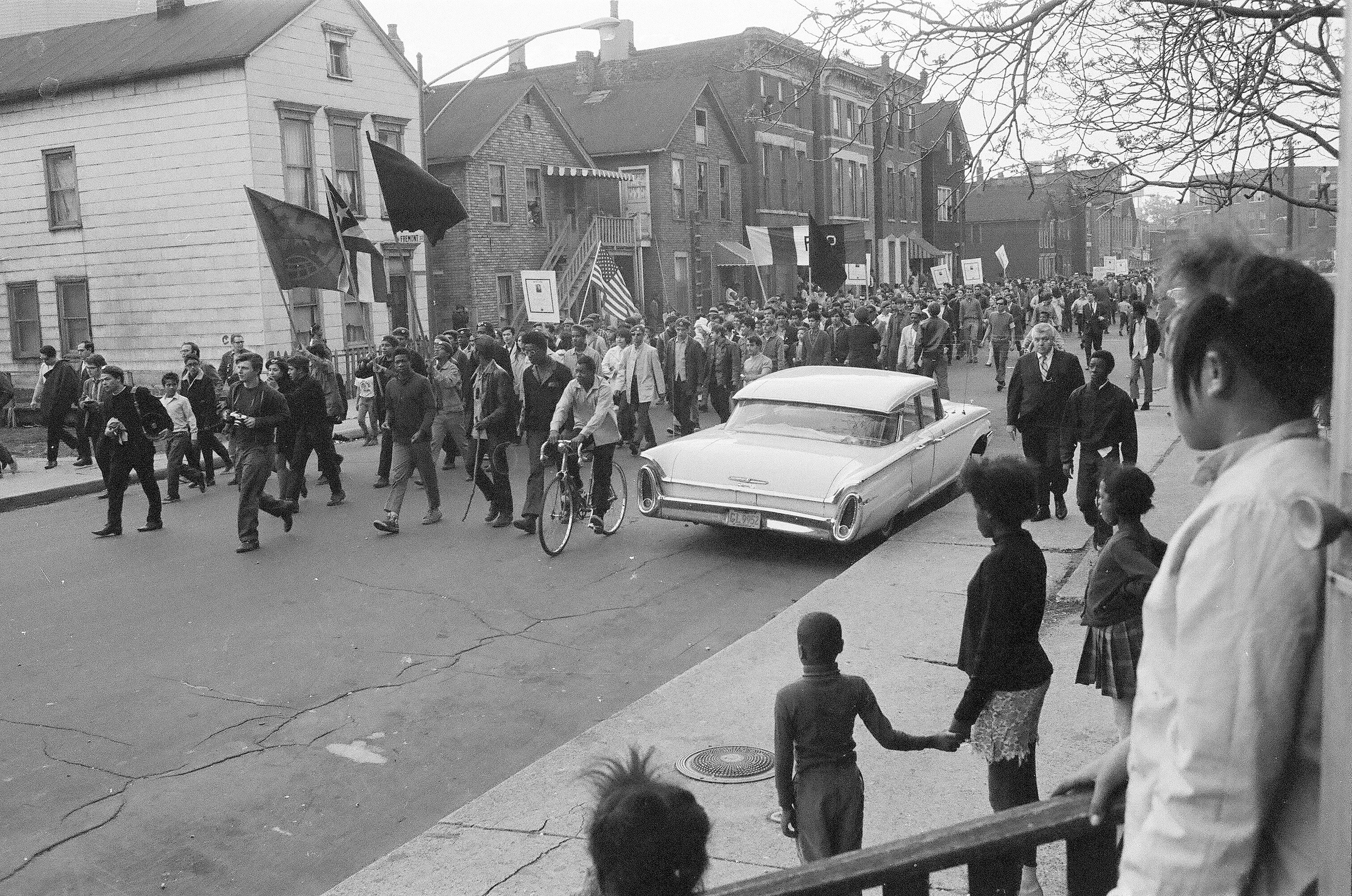
Demonstrators from various community organizations in Chicago marching to protest the killing of Manuel Ramos, 1969.
Despite its long history of racial and ethnic tension, by the 1960s, Chicago was home to three community organizations: the Black Panther Party, Young Lords, and Young Patriots. While each group was aligned with a different ethnic identity, they were all united in their fight against the city’s racism and brutal urban poverty and for neighborhood empowerment and civil and human rights. These grassroots organizations formed the Rainbow Coalition, led by the Black Panther Party, with the goal of pressuring the Chicago city government officials to address their grievances and enact meaningful local change.
Essential Question
How did the Black Panther Party organize and empower a multiracial grassroots coalition to address common economic and social issues that had been ignored by the Chicago city government officials?

