Introduction
On August 28, 1963, 250,000 protestors and numerous civil rights organizations—including CORE, SCLC, the SNCC, and the NAACP—marched onto the National Mall in Washington, D.C., to unite in support of freedom and human rights. In front of the Lincoln Memorial, Dr. Martin Luther King, Jr., recited his “I Have a Dream” speech, one of the most celebrated and recognizable speeches in U.S. history. In addition to his skillful use of vivid imagery and words that inspire hope and paint a post-racial vision of the United States, King pulled directly from the Declaration of Independence in this speech, and in others, to further the case for civil rights.
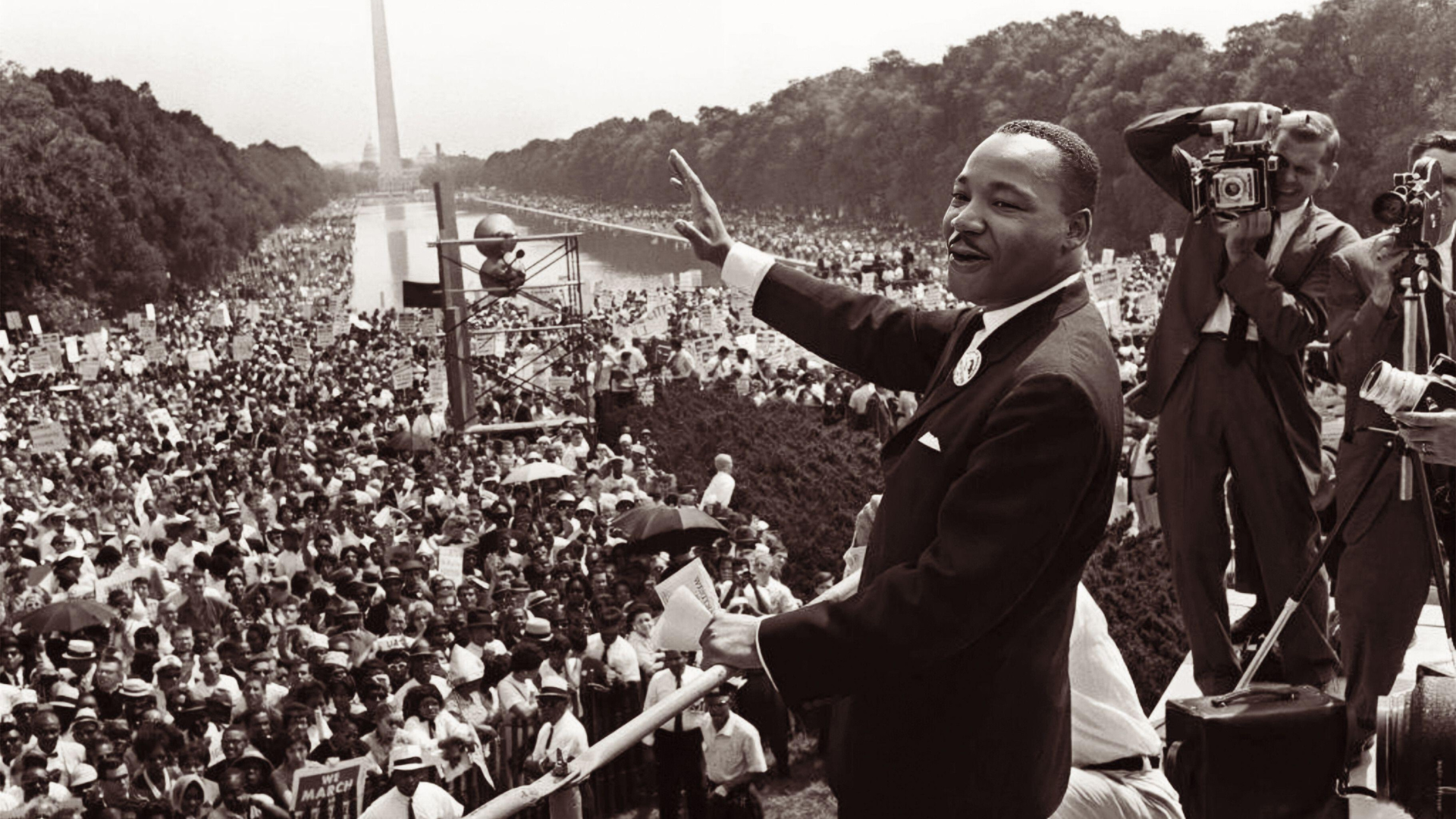
Martin Luther King Jr. waves to the crowd on the National Mall during the March on Washington for Freedom and Jobs, 1968.
In this interactive lesson, students will learn about the Black freedom struggle of the 1960s, including the 1963 March on Washington for Jobs and Freedom, and the events surrounding King’s incarceration in a Birmingham jail that same year. Students will read sections of Dr. King’s “I Have a Dream” speech and “Letter from a Birmingham Jail” as well as the Declaration of Independence and identify how King used the language of the Declaration of Independence to connect to and justify the 1960s civil rights movement. At the end of the interactive lesson, students will respond to the essential question.
Essential Question
How did Dr. Martin Luther King, Jr., use the Declaration of Independence to further the case for civil rights?

