Conditions in Chicago in 1969
By 1969, most of the Black residents of Chicago suffered from substandard housing, second-rate education, and inferior health care. Neighborhoods were often segregated, and Black people found themselves victim to the historic implications of redlining. Despite the recent passage of the 1968 Fair Housing Act, most Black residents lived in rat-infested, decaying neighborhoods, often without running water or heat. The Black infant mortality rate was twice that of White families. Black children went to overcrowded and underfunded schools in a system that remained segregated well after the 1954 Brown v. Board of Education decision because of White Flight. To make matters worse, the city government was aware of these problems but failed to take any meaningful steps to address them.
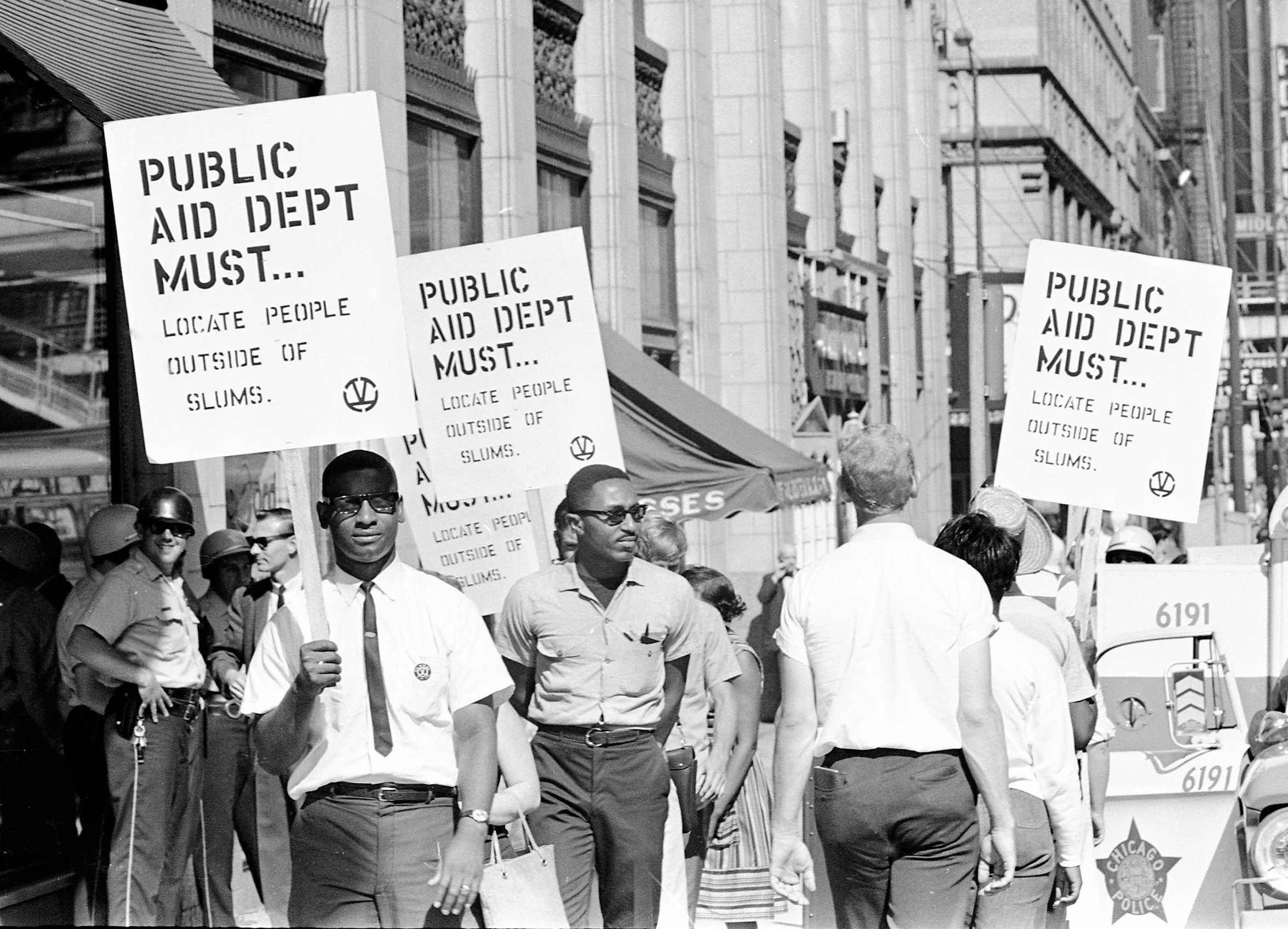
Chicago Freedom Movement members, some with signs, demonstrate as part of a widespread open-housing demonstration outside the Cook County Public Aid Department, Chicago, Illinois, August 16, 1966.

