Article III: The Judicial Branch
The judicial branch is the least defined branch under the U.S. Constitution. The judicial branch decides the constitutionality of federal laws and resolves other disputes about federal laws.
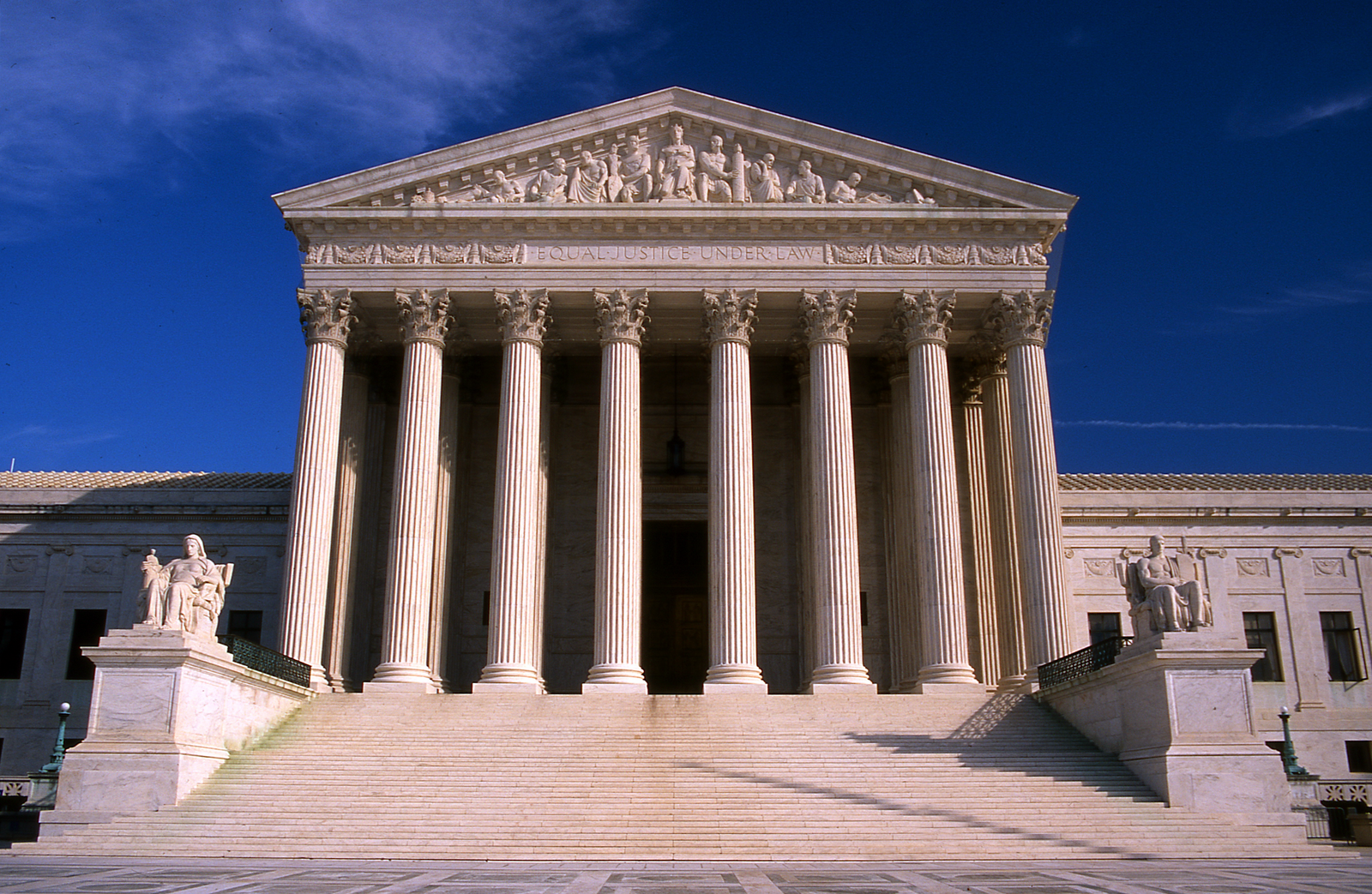
The U.S. Supreme Court building.
Watch the video to learn more about what the Supreme Court does.
NARRATOR: Hi and welcome to Social Studies Shorts where we explore a little more about our state, our country and the world!
Today let’s take a look at the U.S. Supreme Court, the highest court in our nation. It is at the top of our judicial branch of the federal government. When there is disagreement about what a law means, the nine Supreme Court justices make the final decision about it.
Other courts are included in the judicial branch. However, the only one established by the U.S. Constitution is the U.S. Supreme Court.
The justices who serve on the Supreme Court are nominated by the president and then go through a rigorous screening process.
Believe it or not, the Constitution doesn’t list any specific requirements for Supreme Court justices. It only says the person should ‘exhibit good behavior.’ Justices aren’t required to be lawyers or law school graduates. However, most of our recent justices have served on lower courts and taken part in numerous cases before being considered for this high honor.
When there is a vacancy, the president relies on recommendations from the Department of Justice, members of Congress, and current judges and justices, plus a review from the F.B.I. Once the president chooses a nominee, that man or woman goes through hearings before the Senate Judiciary Committee. Members of that committee will either send the nominee to the full Senate for a vote or reject the person. If the nominee gets the nod from the full Senate, he or she is then confirmed and becomes a justice of the U.S. Supreme Court.
Since 1869 the high court has consisted of nine justices. That is one chief justice and eight associate justices. They all work together to make decisions about the cases they review.
Each justice is appointed for life. This is to ensure that they can make their decisions without being influenced by running for the office, or re-election. They may retire from their position if they choose.
A Supreme Court justice may also be impeached – charged with misconduct – and removed from office if Congress can prove the justice has done something wrong and should no longer serve on the court.
The Supreme Court meets in its own building in Washington, D.C. Each year the justices review dozens of cases. Most cases have been argued in state courts. But if the state court decisions don’t seem fair or if there is a question about the constitutionality of a decision, then someone involved in the case can petition the Supreme Court for review.
Nearly seven thousand of these petitions come to the high court each year. Court clerks, or aides, sift through the petitions before sending them on to the justices. All of the justices must look at each of the petitions. Together they decide which cases they will review each year.
The justices can decide to agree with the lower court’s decision on a case. Or they can choose to overturn that decision. Either way, the Supreme Court has the final say. Once they have ruled, the justices’ decision cannot be appealed.
We’re sure you won’t appeal the end of this lesson! Get your decisions in order and join us soon for more Social Studies Shorts!
| Keyboard Shortcut | Action |
|---|---|
| Space | Pause/Play video playback |
| Enter | Pause/Play video playback |
| m | Mute/Unmute video volume |
| Up and Down arrows | Increase and decrease volume by 10% |
| Right and Left arrows | Seek forward or backward by 5 seconds |
| 0-9 | Fast seek to x% of the video. |
| f | Enter or exit fullscreen. (Note: To exit fullscreen in flash press the Esc key. |
| c | Press c to toggle captions on or off |
Take Notes
Answer the question below using what you have learned in this lesson about the powers granted to each branch of government.

